Norse Atlantic raises $110 million as the fuel crisis undoes months of progress
Norse Atlantic entered 2026 with its first credible profit forecast. Eleven weeks later, it was asking shareholders for $110 million. The fuel crisis has found its most exposed victim.

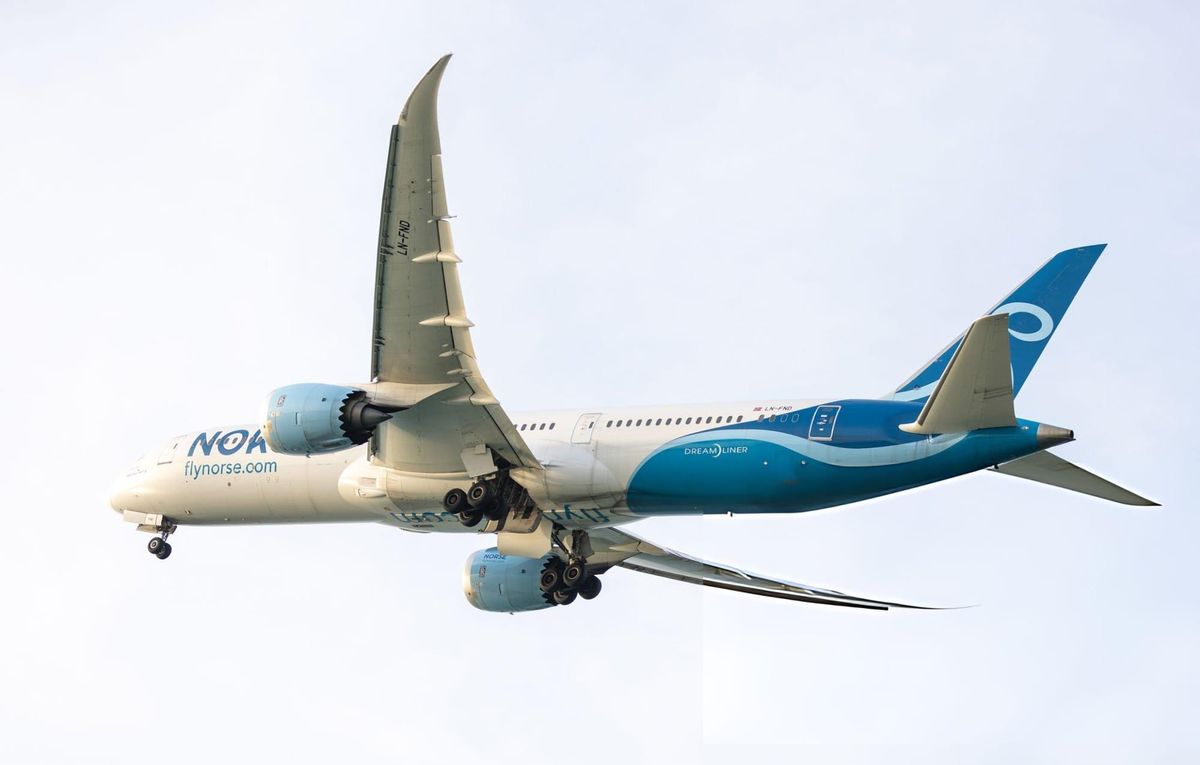
Norse Atlantic's announcement on 14 April was as stark as anything the low-cost long-haul sector has produced since the pandemic. The carrier launched a fully underwritten rights issue targeting $110 million in gross proceeds at a subscription price of NOK 0.50 per share — against a closing price of NOK 3.86 the night before. Shares slumped more than 50% when trading resumed in Oslo on 15 April. A company that spent 2025 slowly, painstakingly building commercial credibility had, in the span of a single announcement, reset its equity story to near zero.
The proximate cause was fuel. Increases in fuel cost on Norse's own network added costs of $10 million per month from the end of February 2026; the carrier estimates that if current prices prevail, additional fuel costs could increase by $100 million on a twelve-month basis. That number alone is decisive for an airline that, even in its best recent months, was operating on thin margins with negative book equity. Book equity at 30 September 2025 stood at negative $237.9 million.
The ACMI hedge
What makes the Norse situation analytically interesting — rather than a simple repeat of Norwegian Air's long haul collapse — is how close the company came to a viable structure. The dual ACMI and own-network model that CEO Eivind Roald spent the final months of 2025 completing was, in theory, a genuine hedge against exactly this scenario. Norse's activities are now equally split between scheduled flights and third-party wet-lease operations, with six 787s on long-term ACMI contract with IndiGo. On those six aircraft, the fuel bill belongs to IndiGo entirely.
The problem is the other six. Running a 100% long-haul airline is expensive if the market, competition or geopolitical situation goes against it — and running a 50% long-haul airline with an unhedged fuel position is not dramatically safer when the price shock is as sudden and as large as the one that arrived in late February. Norse has no fuel hedging arrangements in place and is fully exposed to jet fuel price fluctuations. For comparison: Ryanair enters the current quarter 84% hedged at $77 per barrel. Norse enters it with nothing.
Ticket pricing compounds the problem. Low-cost carriers by definition sell seats in advance at locked-in fares. The fuel spike that materialized from late February arrived after much of Norse's summer inventory had already been priced and sold, leaving the airline absorbing cost increases that could not be passed through to existing bookings. The February guidance — full-year EBITDAR of $130-150 million and profit before tax of $20-40 million — was constructed on a forward curve that no longer exists. It was withdrawn in full on 14 April.
Operational momentum, structural fragility
The cruelty of the timing should not be understated. In March 2026, TRASK in Norse's own network reached 6.4 US cents, up 59% year over year, while passenger traffic rose to 124,135 and load factor reached 99% across network and ACMI operations. These are exceptional numbers for a four-year-old airline. The commercial model — concentrating scheduled capacity on high-demand routes while offloading older, lower-yield capacity into the IndiGo ACMI contract — was producing exactly the unit revenue improvement the strategy promised.
The carrier cut its full-year operating loss to $20 million in 2025 from $97 million the prior year, while net losses halved to $62 million from $135 million. The trajectory was unambiguous. The timing, however, placed Norse at the precise moment of maximum vulnerability: past the worst of its structural losses, not yet into sustained profitability, carrying no fuel hedge and no covenant protection against a commodity shock.
The LA cancellation and what it signals
Two days after the rights issue announcement, schedule data showed Norse had closed reservations for planned summer 2026 Los Angeles services from London Gatwick, Paris CDG, and Rome Fiumicino. The suspension of transatlantic capacity is not merely a cost-saving measure; it is a read on how management views the near-term revenue environment. Long-haul leisure routes to the US are the most price-elastic part of Norse's network and the most difficult to reprice quickly when fuel moves. Pulling them reduces cash consumption; it also signals that management does not expect the pricing environment to recover fast enough to make those routes economic this summer.
Project Falcon, Norse's cost reduction programme, has a target of $40-50 million in annual savings, with 80% already identified. The accelerated implementation of those savings forms part of the near-term liquidity plan alongside the rights issue and the $70 million bridge loan provided by largest shareholder BT Larsen & Co, Songa Capital, and funds managed by Borea Asset Management.
The strategic review: acquirer logic
The most consequential element of the 14 April announcement was not the rights issue. Norse is in advanced preparations with an international investment bank to initiate a strategic review to explore strategic alternatives including a sale, merger, or partnership, expected to be concluded within 2026.
The acquirer logic here is not difficult to construct. Norse's fleet of twelve 787-9s sits on lease agreements that are highly favorable compared to current market rates with no price or inflationary adjustments, providing a significant long-term cost advantage. Those leases — agreed when 787 values were depressed following Norwegian's exit from long-haul — represent a structural asset that a larger carrier with fuel hedging capability and a yield-management infrastructure could exploit far more effectively than Norse can independently.
The candidates most frequently discussed in the industry are European carriers with existing widebody long-haul ambitions and the financial resilience to absorb a distressed acquisition. Norse's Gatwick slots, its established transatlantic and Asia routes, and its IndiGo ACMI relationship would all carry strategic value to the right buyer. No indicative offer has been received, and no agreement has been reached on the principal terms.
What to watch
The extraordinary general meeting to approve the rights issue is scheduled for 2 June 2026 — the same date as the last day of trading including subscription rights. Shareholder approval is expected given that the issue was substantially oversubscribed and that BT Larsen personally pre-committed $30 million. The more consequential date is the conclusion of the strategic review, which the company has said will happen within the year.
Since its first flight in June 2022, Norse has raised approximately $360 million in new capital and accumulated losses of around $550 million. The question the rights issue does not answer is whether a further $110 million buys enough time for fuel markets to normalize, or whether it simply extends the runway to a negotiated exit. At a 99% load factor with record unit revenues, Norse's commercial case has never been stronger. The fuel curve, not the demand curve, is now the only number that matters.