IndiGo's loss narrows to ₹18.8bn as fares rise by a third
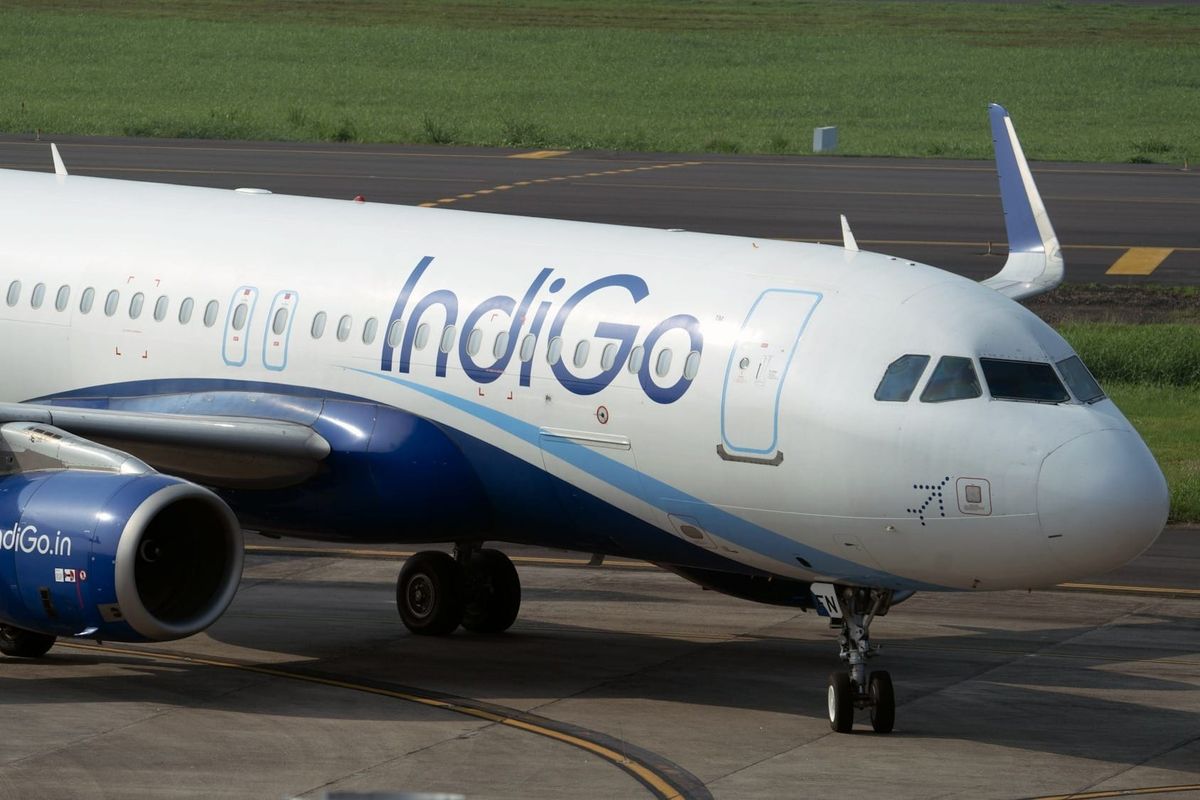
IndiGo's quarterly loss narrowed to ₹18.8bn as fares rose 34 per cent and capacity fell 1 per cent, in Willie Walsh's first results as chief executive. Fuel up 67 per cent and a weaker rupee kept the airline in the red.

All figures are in Indian rupees. $1 = ₹95.26.
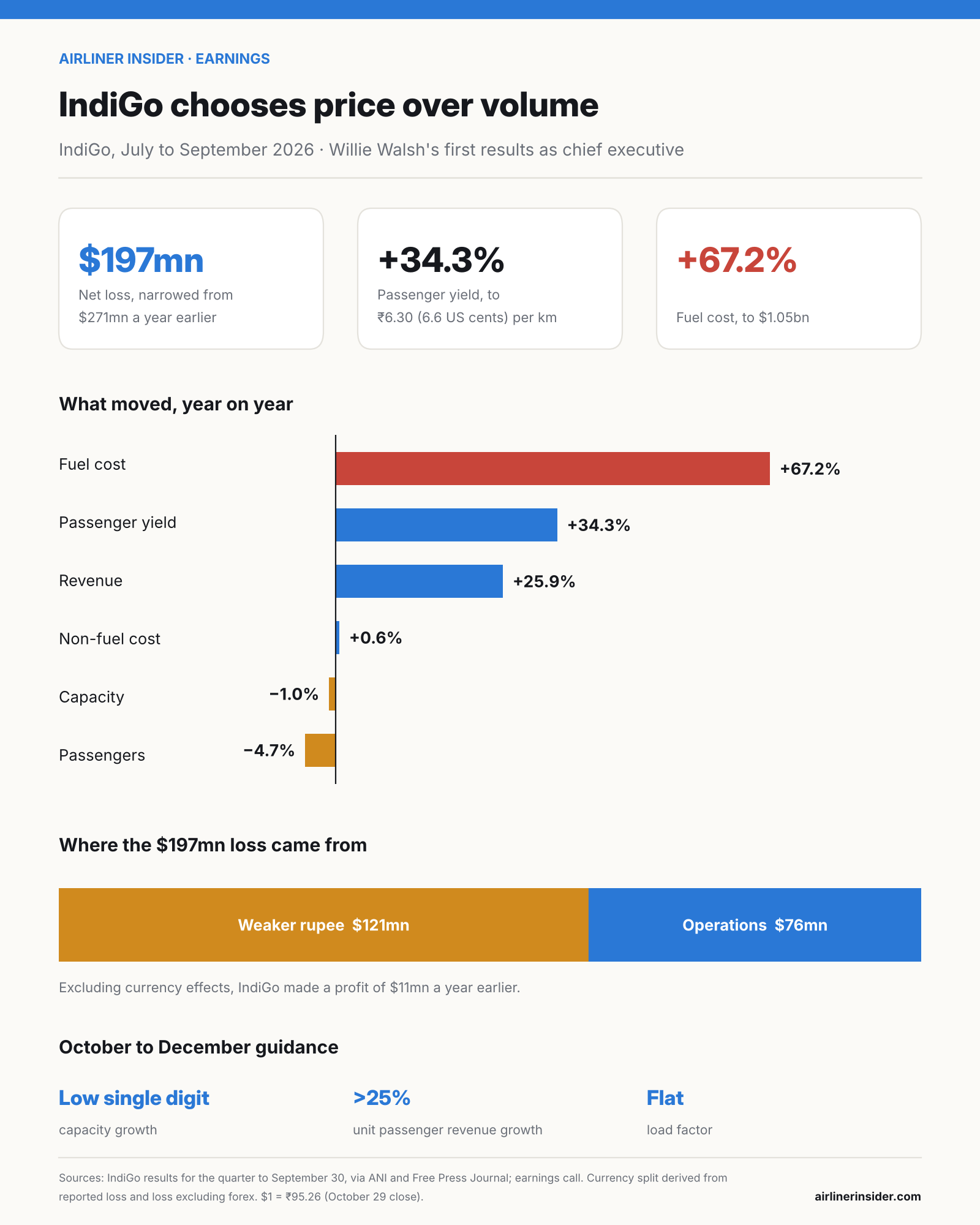
IndiGo, India's largest airline, reported a net loss of ₹18.8bn for the three months to September on October 29, narrower than the ₹25.8bn it lost a year earlier, as revenue from operations rose 25.9 per cent to ₹233.6bn. The results were the first under chief executive Willie Walsh, the former head of British Airways and of the International Air Transport Association, who took charge in August after Pieter Elbers left.
Fares did most of the work, with passenger yield up 34.3 per cent to ₹6.30 a kilometre while capacity fell 1 per cent and passenger numbers 4.7 per cent to 27.5mn. The load factor slipped 2.2 points to 80.3 per cent, a trade that suggests IndiGo chose price over volume in what Walsh called a "seasonally soft" quarter.
Fuel and the currency absorbed the gain, with fuel costs rising 67.2 per cent to ₹99.7bn, while non-fuel costs rose only 0.6 per cent. The rupee has fallen about 9 per cent against the dollar over the past year, which raises the cost of aircraft leases and maintenance that IndiGo pays in dollars.
Excluding currency effects, IndiGo's loss was ₹7.2bn, compared with a profit of ₹1.0bn a year earlier, so the airline would still have lost money without the weaker currency. Walsh described a quarter of "exceptionally elevated fuel costs and continued geopolitical turmoil", in which capacity cuts and yield management only partly offset the higher costs.
Earnings before interest, tax, depreciation, amortisation and rent more than doubled to ₹24.6bn, and IndiGo ended September with cash of ₹526.9bn, including ₹399.3bn of free cash. Its total debt, including lease liabilities, was ₹873bn, and its fleet stood at 442 aircraft.
IndiGo expects capacity growth in the early single digits in the October to December quarter, with unit passenger revenue up more than 25 per cent and a flat load factor. Capacity cuts will fall mainly on international routes, and IndiGo will end its leased widebody operations on November 1, ahead of its own Airbus A350 deliveries from 2028.
Walsh said he still regards India as "one of the most compelling aviation markets in the world", and the pause in long-haul flying until the A350s arrive leaves IndiGo concentrated on its domestic and short international networks. The October to December quarter, a seasonally stronger period, will show whether protecting fares rather than market share returns the airline to profit.
What to watch: whether fares hold at the higher level through the festive season, the effect of the rupee on lease costs if it weakens further, and Walsh's plans for international growth before the A350s arrive.