AirAsia halves its loss as higher fares offset fuel
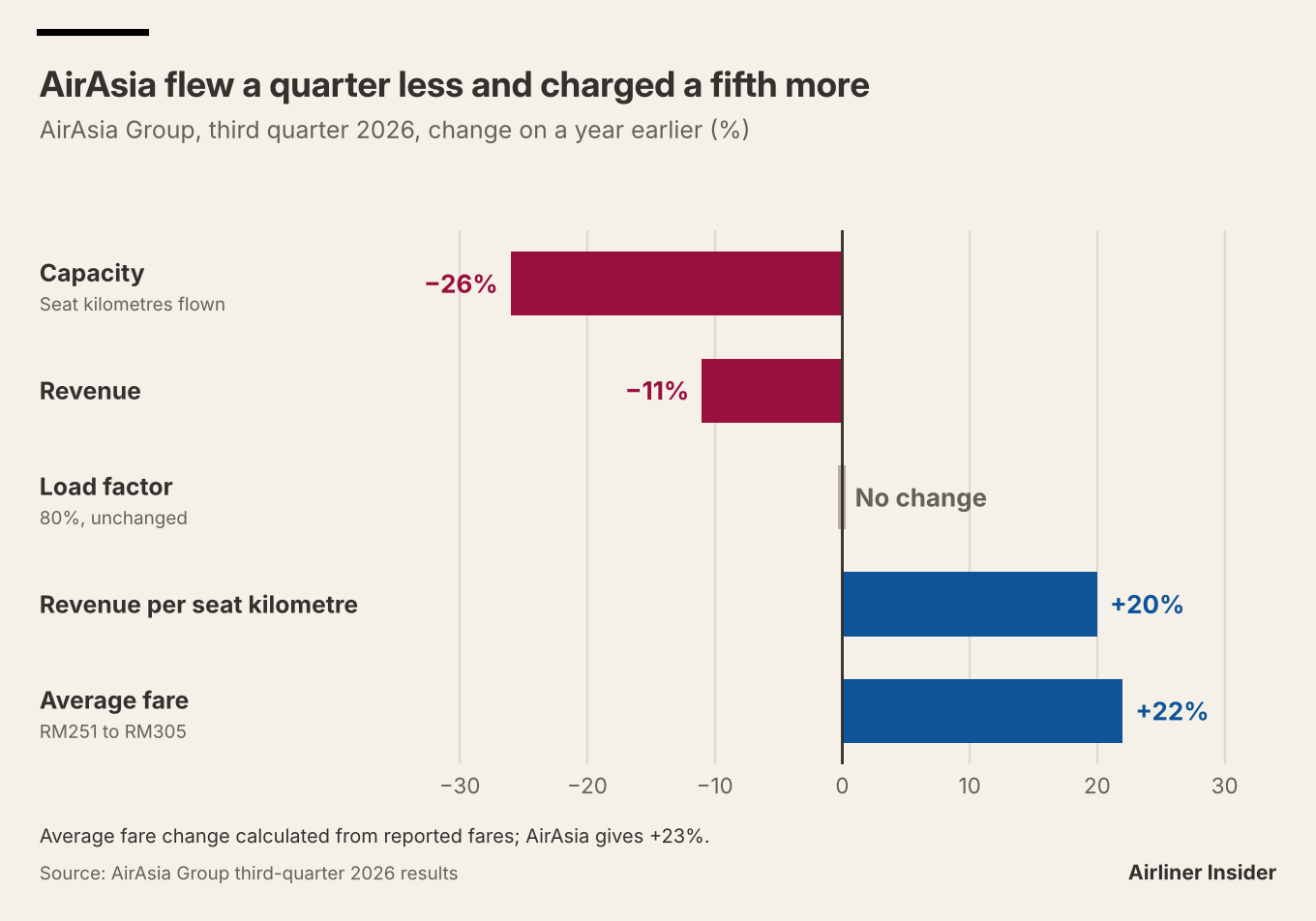
AirAsia Group cut capacity by 26 per cent and raised fares by about a fifth, narrowing its third-quarter net loss to RM381.3mn from RM830.5mn in the previous quarter. Nearly a third of its fleet is out of service and its cash has fallen below RM1bn.


$1 = RM4.12
AirAsia Group narrowed its net loss to RM381.3mn in the three months to September, from RM830.5mn in the previous quarter, after cutting capacity by 26 per cent from a year earlier and raising fares to offset the higher cost of fuel. Revenue fell 11 per cent from a year earlier to RM4.66bn, while the loss attributable to shareholders, which excludes losses borne by the other owners of its regional airlines, was RM175.1mn.
The group, which took over Capital A's airlines in January and does not give a year-earlier comparison for its losses, said its net loss would have been RM239.4mn without foreign exchange losses of RM141.9mn. Bo Lingam, its chief executive, described the strategy as "shrink to grow stronger", cutting unprofitable routes and returning older aircraft while the fleet is renewed.
Average fares rose by about a fifth to RM305, and revenue per available seat kilometre, the income earned for each seat flown one kilometre, rose 20 per cent, while the load factor held at 80 per cent. The group said fares, surcharges, smaller capacity and cost control together recovered about 75 per cent of its higher fuel bill, with jet fuel averaging $152 a barrel in the quarter, down from a peak of $183 in the second.
The smaller network also reflects aircraft the group cannot fly, with nearly a third of its 234 aircraft out of service at the end of September. AirAsia has returned eight older aircraft to their owners so far this year and plans to return 25 by the end of it.
The balance sheet is the larger concern, with cash of RM905.3mn against current liabilities of RM19.2bn, and the group said it was in talks with local and international lenders and in restructuring discussions with its main creditors. Its losses for the first nine months of the year reached about RM1.3bn.
Performance varied across the group's markets, with short-haul operations in Malaysia staying profitable on strong Chinese demand for routes to East Malaysia, as did those in Cambodia. Losses narrowed in Indonesia and the Philippines, while Thai AirAsia, which reports separately through its listed parent Asia Aviation, said passenger numbers fell 29 per cent in the third quarter.
AirAsia's approach mirrors the one now spreading through Europe, where airlines are cutting flights, concentrating on their most profitable routes and raising fares to cover higher fuel costs. The difference is that AirAsia is doing so with less than RM1bn of cash and almost a third of its fleet on the ground.
The group expects the year-end holiday season to lift load factors and is targeting a double-digit rise in unit revenue in the fourth quarter, although it expects fuel costs to stay above third-quarter levels. It plans to add capacity on core domestic and busy international routes and restart some seasonal services, describing a shift "from defensive capacity cuts toward a targeted, yield-disciplined growth posture".
What to watch: the outcome of talks with lenders and creditors, and how many grounded aircraft return to service before the peak season.