World's most profitable airline just got more profitable
Emirates posted a record $6.6bn group profit and $6.2bn airline profit for 2025-26, up 7 per cent despite Gulf disruption in February — widening the gap between Dubai and every other airline on earth.

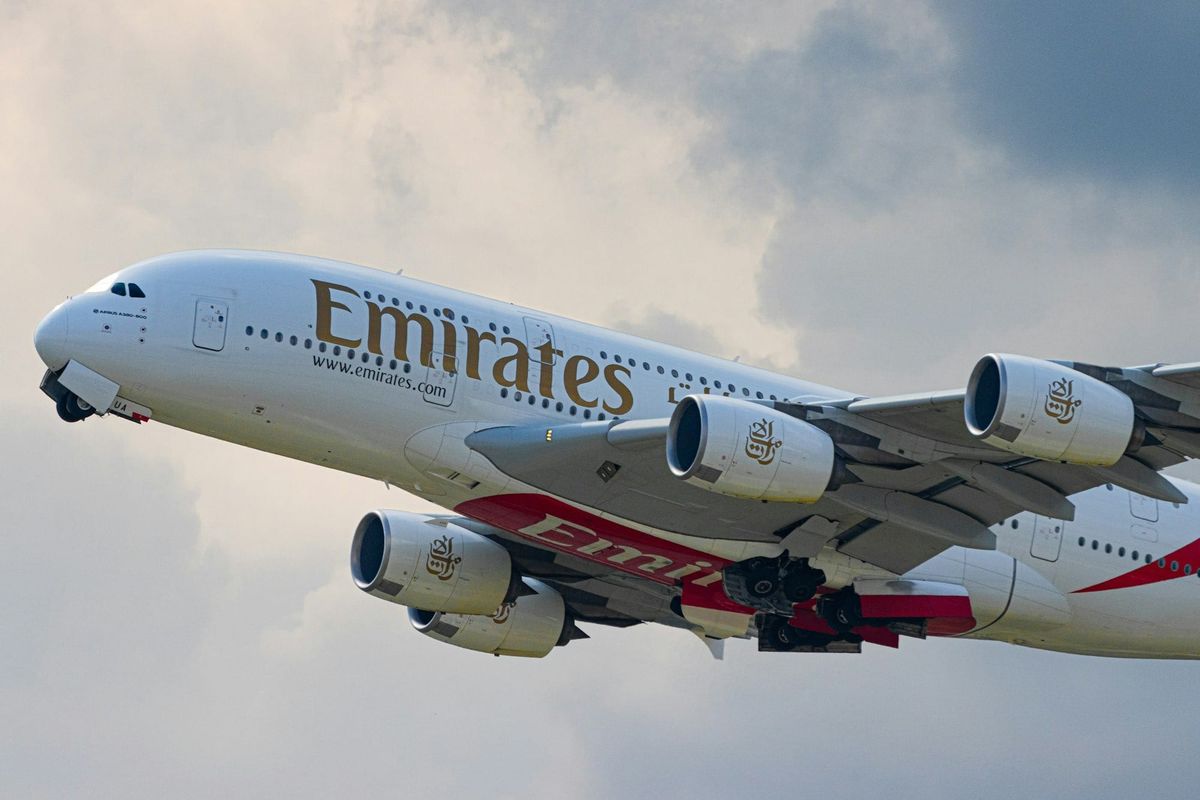
While the rest of the industry counts the cost of the Iran fuel shock, Emirates is counting record profits, and the gap between Dubai and everyone else just widened further.
The Emirates Group released its 2025-26 annual results on 7 May, reporting a record profit before tax of $6.6bn, up 7 per cent year on year, on record revenue of $41.0bn and record cash assets of $16.2bn. The result makes Emirates the world's most profitable airline for the reporting period, a title it has now held for three consecutive years.
Emirates airline itself, the core flying operation, posted a profit before tax of $6.2bn on revenue of $35.7bn, with a profit margin of 17.4 per cent. To put that in context: the entire US airline industry is currently managing guidance withdrawals and profit warnings while Emirates is printing a margin that most European carriers would take for their best year in a decade.
The result is more impressive for the conditions in which it was achieved. On 28 February 2026, military activity in the Gulf massively disrupted commercial air traffic across the UAE, forcing Emirates into an emergency operational response in the final month of its financial year. Sheikh Ahmed bin Saeed Al Maktoum, the group's chairman and chief executive, noted that for the first 11 months of 2025-26 the group was surpassing targets month after month — and that the February disruption arrived just as the year was on course for an even stronger close.
The airline carried 53.2 million passengers in the year, down 1 per cent from the previous year, with a passenger seat factor of 78.4 per cent. Revenue still rose 2 per cent, driven by yield improvement and network expansion — Emirates added Da Nang, Hangzhou, Siem Reap and Shenzhen during the year, taking its global network to 152 cities across 80 countries.
Cash is the number that stands out most sharply against the rest of the industry. Cash assets rose 12 per cent to $16.2bn at the group level — a fortress balance sheet that Sheikh Ahmed used explicitly to signal a different strategic posture from competitors: "The Emirates Group enters 2026-27 with very strong cash reserves, which enable us to progress with our plans to strengthen our business without knee-jerk cost control measures."
That is a pointed contrast. While Lufthansa suspends hedging activity and cuts 20,000 flights, while US carriers withdraw guidance and park aircraft, Emirates is signalling that its $4.9bn investment programme in new aircraft, facilities and technology will continue uninterrupted. The group's $5bn retrofit programme progressed steadily, with 91 of 215 earmarked aircraft completing a full cabin refresh featuring Premium Economy seats; 21 aircraft were equipped with Starlink high-speed Wi-Fi by year-end.
Fleet growth included 15 Airbus A350 deliveries, taking the A350 fleet to 19 aircraft serving 21 destinations, with the total fleet standing at 277 aircraft at an average age of 10.8 years. The order book stands at 367 aircraft — 54 A350s, 270 Boeing 777Xs, 35 787s and 8 777 freighters — with deliveries stretching through 2038.
dnata, the group's aviation services arm, reported a 12 per cent revenue increase to $6.4bn and a record profit before tax of $437mn, driven by international expansion including new ground handling contracts in Australia and Europe. The group paid a $1.0bn dividend to its owner, the Investment Corporation of Dubai.
One structural headwind is worth noting. The UAE's corporate tax rate applied to the Emirates Group increased from 9 per cent to 15 per cent following the adoption of Pillar Two rules, leaving profit after tax at $5.7bn — up 3 per cent rather than the 7 per cent pre-tax improvement. The higher tax rate will apply in full through 2026-27.
The outlook statement was carefully calibrated. Sheikh Ahmed acknowledged that the Iran ceasefire remains fragile and that fuel prices remain elevated, but said the group's fundamentals, cash position, order book, Dubai's role as a global hub, are unchanged. The message was clear: Emirates is not in crisis management mode.