SAS chief van der Werff departs for Air Canada in 2027
Anko van der Werff will leave SAS at the start of 2027 to become Air Canada's next chief executive, replacing Michael Rousseau, whose retirement follows a French-language controversy. The departure leaves SAS mid-fleet order and mid-ownership transition.

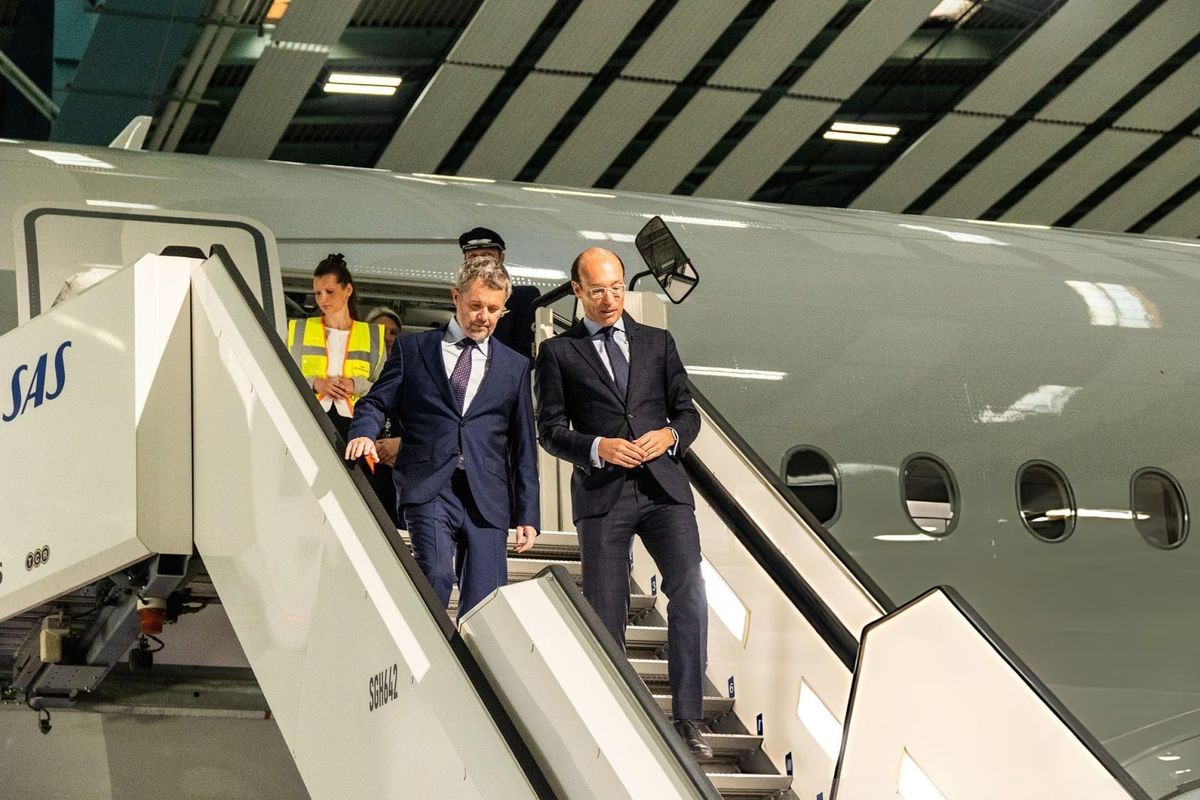
Anko van der Werff, president and chief executive of Scandinavian Airlines, will leave the carrier at the beginning of 2027 to become president and chief executive of Air Canada, the two airlines confirmed on Wednesday 8 July in simultaneous announcements from Copenhagen and Montreal.
Van der Werff will take up the Air Canada role by the end of January 2027, succeeding Michael Rousseau, whose retirement takes effect on 31 August 2026. Rousseau announced his departure in March after the board made French-language ability a formal criterion in the search for a successor, following his English-only statement after a fatal Air Canada Express crash at LaGuardia that drew condemnation from Quebec officials and prime minister Mark Carney.
Van der Werff, who speaks English, Dutch, Spanish, Italian, French, and Swedish at varying levels, confirmed he will serve Canadians in both official languages. Air Canada stated that his selection followed a "comprehensive global search" that included French-language ability among its performance criteria.
Air Canada board chair Vagn Sørensen said the carrier had conducted a "comprehensive global search" and that Van der Werff's 25-year track record, including leadership of SAS through bankruptcy and restructuring, set him apart from other candidates. Van der Werff takes over a carrier that has restored profitability since the pandemic and is mid-expansion, but whose share price remains at roughly 2019 levels and which faces pressure to modernise an ageing widebody fleet of Boeing 777s and older Airbus A330s.
The exit creates an acute timing problem for SAS: Van der Werff is departing mid-fleet order, mid-alliance transition and mid-ownership change, with Air France-KLM in the process of increasing its stake from approximately 20 per cent to 60 per cent. Finding a successor capable of managing that workload while the ownership structure is in flux will not be straightforward.
SAS chairman Kåre Schultz thanked van der Werff for his leadership during "a highly demanding transformation period," saying he had "played a central role in building a stronger and more competitive SAS." Van der Werff said: "This has not been an easy decision. I have greatly valued my time at SAS and the opportunity to work alongside so many dedicated colleagues."
Van der Werff joined SAS in July 2021 when the airline was already in financial distress, steered it through a 15-day pilot strike and Chapter 11 bankruptcy that restructured approximately $2bn in debt, and just last week signed the $10bn A330-900 order at a ceremony in Copenhagen. Cirium data ranks SAS aircraft as third most punctual in the world in 2025 at 86 per cent on-time performance; by conventional metrics the tenure is one of the more successful airline turnarounds in recent European history.
The appointment carries a structural irony that the press releases do not address: Benjamin Smith, chief executive of Air France-KLM and a former Air Canada chief operating officer, was widely reported as a candidate for the role. Van der Werff's appointment instead brings the incoming Air Canada chief executive from within the Air France-KLM ecosystem, given that firm's ownership of SAS, without appointing Smith himself.