UK rewrites the rules on airport slots
The UK has begun dismantling its post-EU slot allocation rules for the first time since 1993 — but the harder questions on grandfathering and secondary trading remain unresolved.

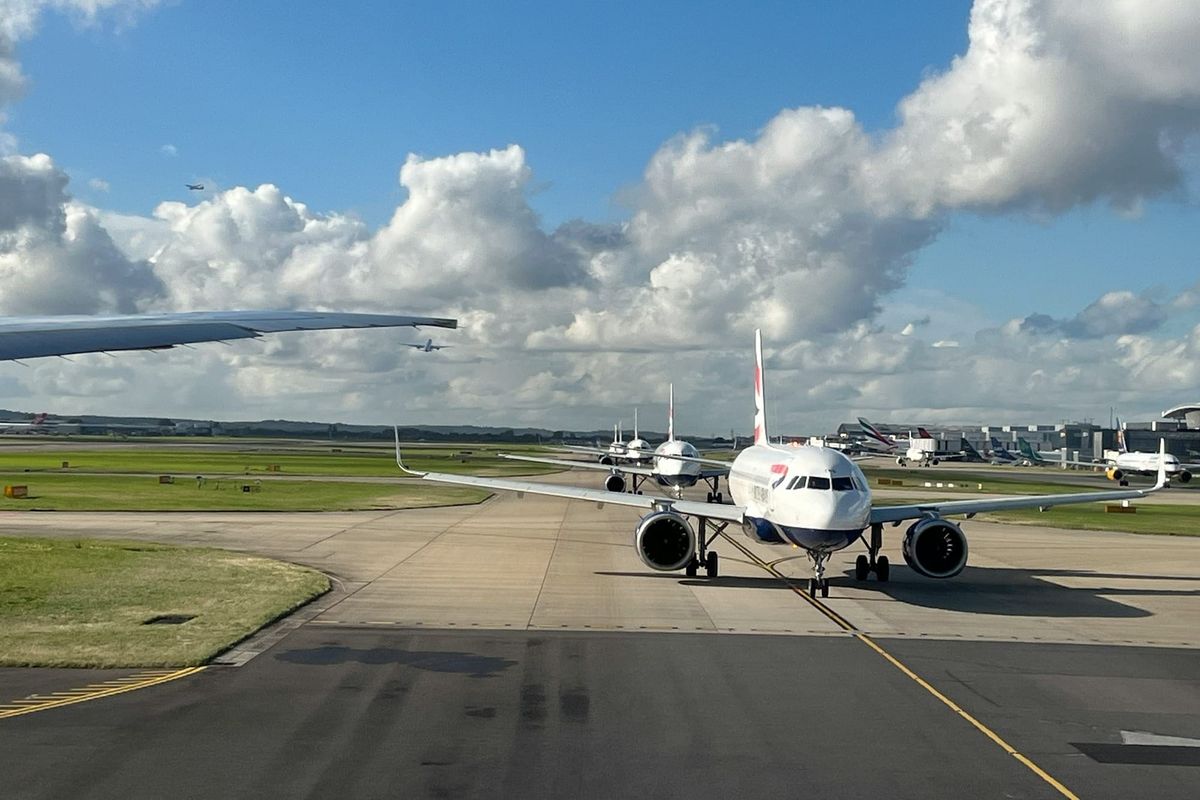
For the first time in more than three decades, the United Kingdom is dismantling the regulatory architecture that governs who flies from Heathrow, and when. The changes now moving through Westminster represent the most consequential shift in British airport slot policy since the early 1990s — and the airlines that have spent years accumulating prime-time access to the world's busiest two-runway airport are watching carefully.
The immediate trigger was Brexit. EU Regulation (EEC) No 95/93, the legislation that has governed slot allocation at co-ordinated airports since 1993, became retained UK law after 2020. That gave the government a formal mechanism to amend the rules without requiring Brussels to move first. The Department for Transport (DfT) launched a full consultation in December 2023, which closed in March 2024. The Competition and Markets Authority gave the proposed reforms a clear endorsement in August 2024. Legislation has already begun to flow.
The Airports Slot Allocation (Alleviation of Usage Requirements etc.) Regulations 2025 came into force on 13 February 2025. The first measure raised the threshold for what constitutes a new entrant airline, a carrier entitled to priority access when fresh slots enter the pool, from those holding fewer than five daily slots at a co-ordinated airport to fewer than seven. The intent is to widen the competitive window: carriers that have established a small but viable presence can now continue to draw on new entrant protections rather than being forced into open competition with airlines that have held their slots for decades.
The second measure expanded the grounds under which airlines may return slots without penalty, formally known as justified non-use of slots. The government updated the rules to include pandemics and comparable health emergencies, a direct response to the Covid-19 period in which airlines were compelled to operate near-empty aircraft purely to protect their slot holdings. The practice, widely called ghost flights, attracted sustained political criticism and prompted the temporary alleviation measures that ran from 2020 to 2023.
Both changes are administrative. The larger structural battle has not yet been resolved.
The DfT consultation identified three fault lines that have shaped Heathrow's slot market for years. The first is grandfathering: airlines that operate at least 80 per cent of a given slot series during a season retain the right to that series indefinitely. The 80:20 rule, as it is known, has been the foundation of schedule stability since the IATA Worldwide Slot Guidelines were first adopted. It is also the mechanism through which British Airways has accumulated a position at Heathrow that, for the summer 2022 season, was roughly ten times the slot holding of its nearest competitor. That concentration has not shifted materially in 15 years; the only major redistribution has come through airline mergers.
The second is secondary trading. Unlike most European jurisdictions, the UK has long permitted airlines to exchange slots with a financial consideration attached. Oman Air paid $75mn for a daily pair of Heathrow slots in 2016. Virgin Atlantic used its Heathrow slot portfolio to secure £220mn in investment capital. The DfT's consultation proposals included a public register of all slot holdings and a regulated platform for secondary transactions — measures designed to bring transparency to what is currently an opaque bilateral market.
The third is slot leasing. Under the proposed reforms, limits would be placed on how long an airline can lease rather than operate a slot before it reverts to the pool. This is a direct challenge to a practice through which carriers can monetise slots they do not intend to fly, effectively warehousing scarce runway access. The Alaska Airlines case illustrates the mechanics: in late 2025, Alaska secured a daily Heathrow slot pair via a lease from American Airlines covering the summer 2026 season, the transfer filed with ACL in advance of the summer schedule. Under the proposed reforms, repeated or extended leasing of this kind would become harder to sustain without triggering reallocation.
The current Labour government has described itself as considering the need for wider reform beyond the 2025 regulations, but no timetable for primary legislation has been announced. The powers under the Retained EU Law (Revocation and Reform) Act 2023 that enabled the February 2025 changes expire in June 2026, which narrows the window for further secondary legislation.
ACL, which manages slot co-ordination across nearly 80 airports globally and administers the Heathrow process, launched a separate consultation in early 2026 on its enforcement code — the rules governing financial penalties for slot misuse. That consultation has been extended to 31 May 2026. British Airways, American Airlines and Tunisair each received penalty notices from ACL in late 2025 for operations conducted outside their allocated slots during the summer season.
Heathrow itself has asked the government not to depart too heavily from the IATA Worldwide Slot Guidelines, arguing that stability and route choice depend on the 80:20 ratio remaining intact. That position is consistent with the airport's commercial interest: a more dynamic reallocation system would risk disrupting the scheduling certainty that underpins its terminal and infrastructure planning. New entrant carriers and consumer advocacy groups have pushed in the opposite direction, arguing that the current system has kept fares on key routes artificially high by shielding incumbent positions from competitive pressure.
The Competition and Markets Authority's endorsement of reform is not a trivial signal. The CMA noted that the slot allocation process has had a restrictive effect on slot mobility and created barriers to entry at the most constrained airports. It also cautioned, however, that sub-scale entry, where new carriers receive slots but lack the network depth to compete effectively, can produce its own distortions, with incumbents simply acquiring the slots once the new entrant fails.