Turkey's flag carrier gets a new captain
Turkish Airlines replaced its chairman, chief executive, chief financial officer and chief commercial officer simultaneously on Thursday. The filing offered one sentence of explanation. Bloomberg reported the incoming executives had met Erdoğan in Ankara the previous day.

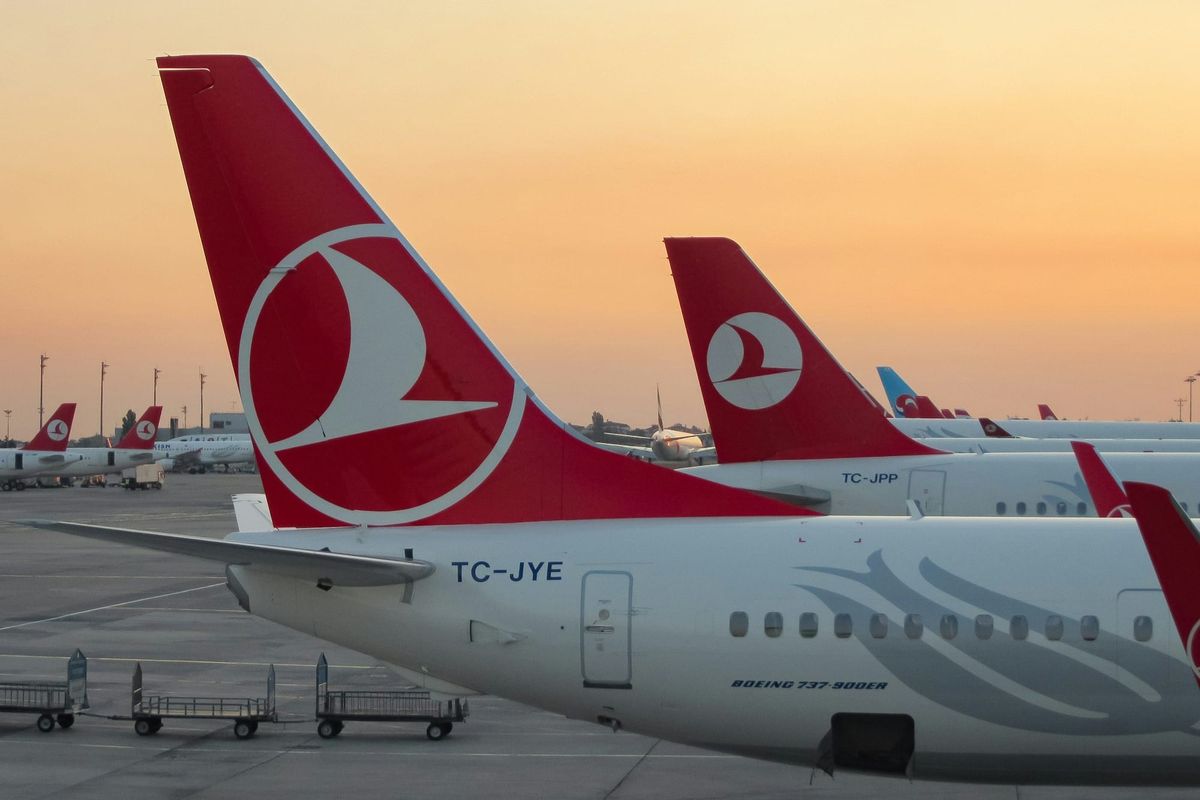
Istanbul Airport was built to announce something. Opened in 2018 on a vast plain on the city's European fringe, it is the largest airport in the world by terminal size — a deliberate architectural statement about Turkey's ambitions and the airline that calls it home. Turkish Airlines flies to more countries than any other carrier on earth. Recep Tayyip Erdoğan has described it as Turkey's most valuable brand. On Thursday, he helped install its new leadership.
Turkish Airlines announced the simultaneous removal of its chairman, chief executive, chief financial officer and chief commercial officer, replacing all four in a single announcement following its Annual General Meeting in Istanbul. The filing to Turkey's Public Disclosure Platform offered one sentence of explanation: the changes were "in line with the airline's corporate objectives." It did not elaborate.
Bloomberg reported that the two men taking the top positions had been at the presidential complex in Ankara the previous day, where they met with Erdoğan. The airline's own statement made no mention of this.
This is not, for those familiar with how Turkey works, a surprising sequence of events. Turkish Airlines is 49% owned by Turkey's sovereign wealth fund, the vehicle Erdoğan established in 2017 to hold the state's strategic assets. The fund's portfolio includes state banks, energy companies and the national lottery. Major appointments at its constituent enterprises do not happen without government awareness. What is less routine is the breadth of Thursday's changes — all four of the airline's most senior executives, gone on the same day, with no explanation offered to investors, employees or the public.
Ahmet Bolat, who steps down as chairman after leading the airline since January 2022, leaves behind an airline in considerably stronger shape than he found it. Under his watch, the fleet grew to 528 aircraft — an 11.9% increase in the past year alone — and the airline carried 21.3 million passengers in the first three months of 2026, up 12.7% on the same period last year. Load factors reached 83.5% in the first quarter. He had set a target of 810 aircraft by 2033 and spoke regularly of his ambition to make Istanbul the world's pre-eminent aviation hub; the infrastructure to support that vision is largely in place. He has not spoken about his departure.
Bilal Ekşi, who became chief executive in October 2016 and is described in the filing as having retired, steered the airline through the pandemic years and the subsequent recovery that produced some of the strongest traffic numbers in the carrier's history. He too has said nothing publicly.
Their replacements are insiders of long standing. Murat Şeker, the new chairman, joined Turkish Airlines as chief financial officer in July 2016, having worked previously at the World Bank and as a senior vice president at Ziraat Bank, one of the state lenders that form the backbone of Turkish corporate finance. He holds a doctorate in economics from the University of Minnesota, received his professorship in December 2025, and chairs the IATA Financial Advisory Council. He has been on the airline's board since 2021. He is, by training and disposition, a man of balance sheets and financial discipline — which may say something about what the airline's new owners expect of him.
Ahmet Olmuştur, the incoming chief executive, has a rather different story to tell. He joined Turkish Airlines in 2000 as a part-time employee at its call centre — one of thousands of young Turks who passed through the airline's entry-level operations in the years when it was still a mid-sized regional carrier rather than a global giant. Over the following quarter-century he moved through revenue management, pricing, distribution and commercial strategy, becoming chief marketing and sales officer in 2014 and chief commercial officer in 2024. His entire professional life has unfolded within a single organisation, watching it transform from the inside.
Turkish Airlines has always liked this kind of story. It fits the national narrative of disciplined ascent, of an institution — and a country — that built itself into something the world could not ignore. Whether Olmuştur's appointment reflects that narrative, or simply the preferences of those who made the decision, is a question the airline has not addressed.
What is clear is the strategic signal the new leadership sends. Şeker's move from the finance function to the chairmanship suggests that the emphasis on fiscal conservatism will be institutionalised at board level. Olmuştur's commercial background implies the airline intends to extract more value from the network it already has rather than simply continuing to expand it. The airline has itself described the new direction as one of disciplined growth and financial resilience — a notable shift in register from the expansionist language of the Bolat years.
The moment is not without pressure. The Iran conflict that has disrupted global aviation since February has particular implications for an airline whose hub sits at the geographical intersection of Europe, the Middle East and Central Asia. The partial reopening of the Strait of Hormuz following a ceasefire on 7 April has eased oil prices but has not resolved the jet fuel supply crisis IATA has warned will take months to unwind. Turkish Airlines carries exposure to the disrupted airspace on its southern and eastern routes that its new leadership will need to manage carefully.
Turkey has always been a country in which the line between state interest and corporate governance is drawn differently than it is in Frankfurt or London. Those who have covered it long enough learn not to read Thursday's announcement purely as a business story. Four senior executives of a strategically important national carrier departed without explanation on the same day their successors had been in Ankara. The airline said it was in line with its corporate objectives.
In Turkey, that is often how these things are announced. It is rarely the whole story.