The man the industry laughs at is the one who saw it coming
Michael O'Leary has been right about fuel risk, ancillary revenue, secondary airports and marketing for thirty years. The industry is still laughing.

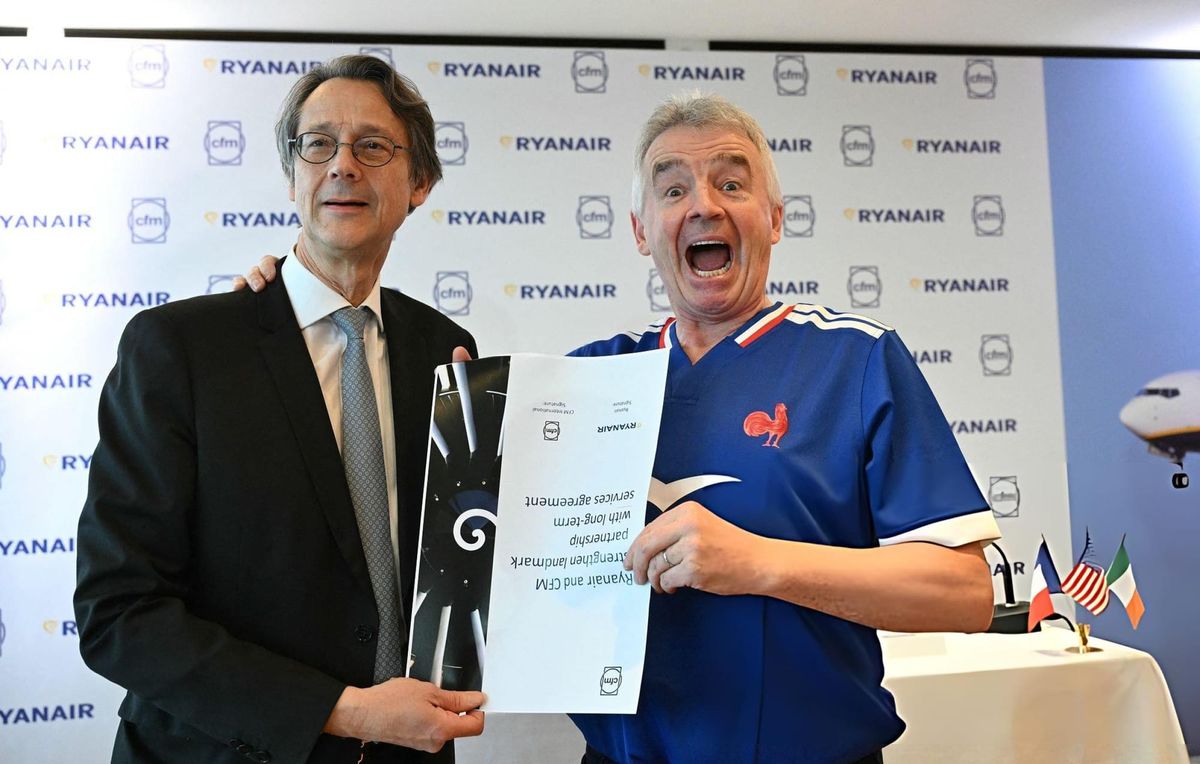
There is a version of Michael O'Leary that the aviation industry has always preferred — the buffoon CEO, the pope costume, the toilet charge proposal, the man who once suggested passengers should be grateful to stand on short-haul flights. This version is convenient. It allows competitors, regulators and commentators to dismiss what he does as noise rather than strategy, and to treat whatever Ryanair is doing as a provocation rather than a lesson.
The Iran war has made this position untenable.
Ryanair entered the current crisis with 84 per cent of its current quarter fuel hedged at $77 per barrel and 80 per cent of next financial year's requirements already secured at approximately $67 per barrel. Spot jet fuel has traded above $190 per barrel during the crisis. The gap between those two numbers — $77 on Ryanair's contracts, $190 on the open market — is not luck. It is the product of a disciplined, consistent approach to commodity risk management that O'Leary has maintained across multiple fuel cycles while competitors have oscillated between hedging and abandoning it based on whichever direction oil was moving at the time.
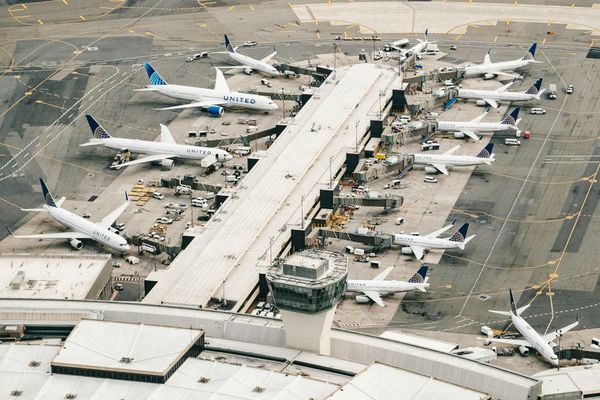
SAS entered 2026 with zero per cent hedged. United Airlines, one of the world's largest carriers, does not hedge its fuel at all. Southwest Airlines, for decades the most committed hedger in US aviation, ended its fuel hedging programme in early 2025 as part of a broader cost-cutting push, with CEO Bob Jordan citing its lack of benefit "for the past 10 to 15 years with a few exceptions." The timing proved unfortunate. O'Leary, meanwhile, has been doing this since the 1990s. He has been right about fuel risk management with a consistency that the industry has conspicuously failed to replicate.
The marketing nobody takes seriously
The toilet charge proposal was never going to happen. O'Leary admitted as much at the time, describing it as "interesting and very cheap PR." The standing cabin was never going to happen either. Neither was charging passengers to put carry-on bags in the overhead locker — though Ryanair did eventually charge for bags, which turned out to be an industry-defining revenue model that every airline from easyJet to American now replicates.
The point of the toilet charge was not the toilet charge. The point was that every journalist who covered it, and there were many, in every serious publication including this one — was simultaneously advertising Ryanair's core proposition: that it charges for things its competitors give away for free, and that passengers pay accordingly less for the seat. O'Leary has said directly that bad publicity sells far more seats than the good, because it prompts people to look up the company and discover the fares. He is describing a media strategy so effective that it costs almost nothing to execute.
Ryanair allocates approximately $20 million to marketing. For context, that is less than United Airlines spends on a single significant advertising campaign. Ryanair has a TikTok account with millions of followers that O'Leary freely admits he does not understand "I have no idea what the hell they do, but my children tell me that our TikTok account is really cool" but which has made the airline's brand the most recognisable in European short-haul among passengers under 35. The Elon Musk spat in January — in which O'Leary called Musk an idiot, Musk called O'Leary an idiot, and Ryanair immediately launched a "Great Idiots" seat sale that generated bookings and global coverage simultaneously — was not a failure of corporate diplomacy. It was a masterclass in turning a news cycle into a revenue event at zero cost.
Compare this to the marketing record of his peers. Scott Kirby of United is a brilliant operational strategist whose public communications are almost entirely consumed by earnings calls and analyst briefings. Ed Bastian of Delta has built a genuinely premium brand, but at the cost of premium marketing expenditure. The CEOs of Lufthansa and Air France-KLM are largely unknown outside the aviation industry. Robert Isom of American is diligently executing a recovery plan that receives the coverage it deserves — which is to say, specialist coverage.
O'Leary is the only airline CEO in the world who is famous. That famousness is an asset worth hundreds of millions of euros in earned media, and it has been built entirely through manufactured controversy executed with precision over thirty years.
What he has consistently been right about
Strip away the persona and the record is one that the industry's more sober figures have not matched.
He was right that short-haul flying is a commodity and should be priced accordingly, at a time when European flag carriers were treating economy class as a premium product.
He was right that secondary airports — Stansted instead of Heathrow, Beauvais instead of CDG, Ciampino instead of Fiumicino — would accept terms that primary airports would not, and that the savings would fund the fares that would fill the aircraft. Every low-cost carrier that followed built its network on the same logic.
He was right that ancillary revenue — bags, priority boarding, seat selection, car hire, hotels — would become the primary profit driver of budget aviation, at a time when most analysts treated it as rounding error. Ancillary revenues at Ryanair grew 7 per cent to €1.39 billion in Q1 of the current financial year alone.
He was right, most recently, about fuel risk. While the rest of the industry treated hedging as a finance department decision to be revisited based on current oil price direction, Ryanair treated it as a permanent structural protection against the kind of shock that history repeatedly demonstrates will arrive without adequate warning.
The comparison that matters
The airline CEO whose strategic record most resembles O'Leary's is not in Europe. It is Ed Bastian of Delta, who has spent a decade building a premium revenue structure — the American Express partnership, the Trainer refinery, the SkyMiles ecosystem — that insulates Delta from commodity shocks in ways that other US carriers cannot match. Bastian does not hold press conferences in a pope costume. The strategic logic, however, is the same: identify your structural vulnerabilities before a crisis arrives and build permanent protections against them.
The difference is that Bastian is celebrated as a visionary and O'Leary is tolerated as an eccentric. The fuel crisis has narrowed that gap to the point of absurdity. Ryanair's balance sheet carries a BBB+ credit rating from both Fitch and S&P, an unencumbered Boeing 737 fleet, gross cash of €2.4 billion and net cash of €1 billion after €1.2 billion in debt repayments, €1.4 billion in capital expenditure and €600 million in shareholder distributions. Those are not the numbers of a budget carrier riding its luck. They are the numbers of the best-managed airline in Europe, built by someone the industry has spent thirty years failing to take seriously.
The crisis will pass. The hedges will roll off. O'Leary will say something outrageous about a politician or a competitor and the cycle will reset. The airlines that survive summer 2026 intact will include Ryanair, almost regardless of what happens to the Strait of Hormuz. The ones that do not will include carriers that looked at O'Leary's approach and concluded that the noise was the story.
The noise was never the story.