The Belfast airline that has been about to launch for years — and why the economics might work
FlyAtlantic has been planning to launch transatlantic flights from Belfast since 2022. The launch date has moved three times. The A321XLR changes the economics of the model in ways that previous attempts could not access. Whether the airline can actually get off the ground is a different question.

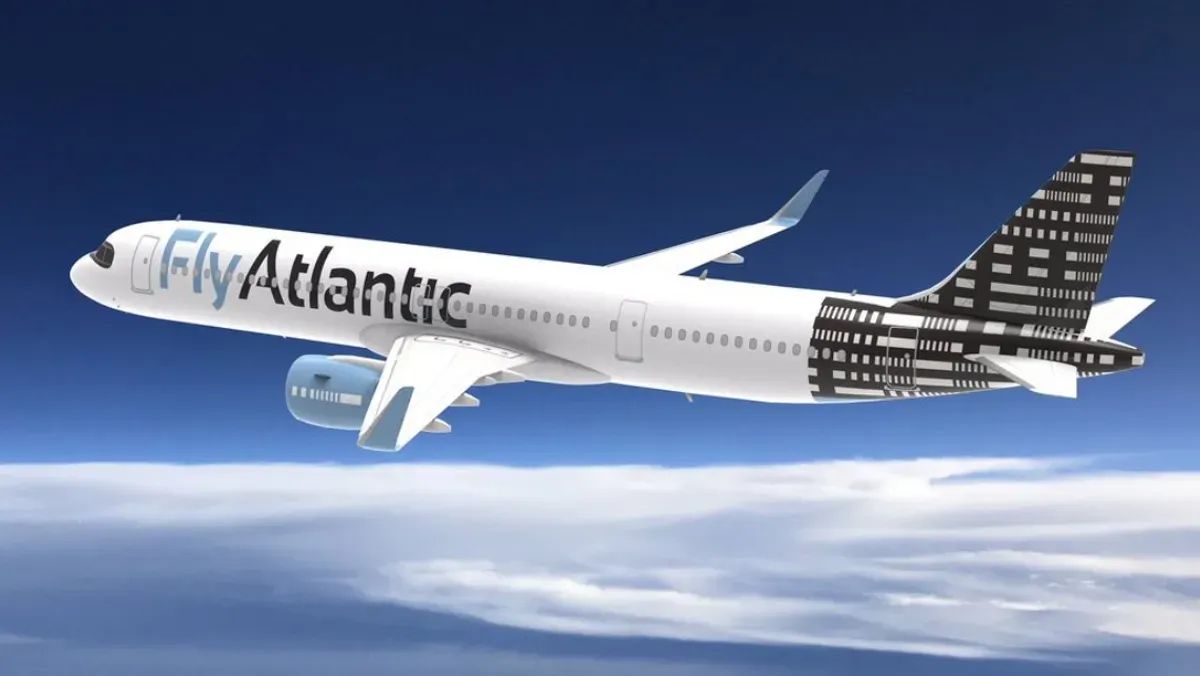
The FlyAtlantic website states, simply, that the airline is "linking Europe, the UK and North America from 2027." It has said something similar since 2022, when the launch was planned for 2024. Then it was spring 2025. Now it is mid-2027. The airline has no aircraft, no confirmed routes, no tickets on sale and no Air Operator's Certificate. It does have offices at Belfast International Airport, a CEO with a complicated CV, and a vision that has defeated every carrier that has attempted it before.
The question is not whether FlyAtlantic has been slow. It has. The question is whether the underlying idea — a low-cost narrowbody hub connecting Europe and North America through Belfast — is sound; and if it is, whether the specific timing of a mid-2027 launch puts it at the right moment in the aircraft technology cycle to succeed where its predecessors could not.
The graveyard of good intentions
The transatlantic low-cost model has produced some of aviation's most spectacular failures. WOW Air, the Icelandic carrier that briefly made sub-£100 transatlantic fares a reality, filed for bankruptcy in 2019. Norwegian Long Haul, which had genuinely disrupted the market with Boeing 787s and fares that forced legacy carriers to create basic economy products in response, abandoned all transatlantic routes in 2021. PLAY Airlines, WOW's spiritual successor founded by former WOW executives using the same Keflavík hub model, exited the US market in late 2025 after running out of liquidity. Norse Atlantic, launched in 2022 by executives who had previously worked at Norwegian, reduced its US operations by 39% for summer 2026 and has pivoted towards ACMI wet-leasing as its primary revenue model.
The pattern is consistent enough to constitute a structural observation rather than a series of individual management failures. The transatlantic low-cost model has a specific problem: the economics work in summer and collapse in winter. Demand for budget transatlantic travel craters from October to March; legacy carriers absorb the cost of off-peak flying through their broader networks and premium cabin revenue; low-cost long-haul carriers, which depend on high-density economy configurations and cannot fund off-peak losses from premium margins they do not have, find themselves burning cash for six months of every year. WOW ran this calculation. Norwegian ran it. PLAY ran it. The answer was always the same.
Andrew Pyne, FlyAtlantic's CEO, has himself advised or led several of the carriers that failed to crack the model. He was a strategic advisor at WOW Air. He led Cobalt Air in Cyprus, which collapsed in 2018. He led TUS Airways, a Cypriot startup, before turning to the Belfast project. His response to the obvious scepticism is that the Belfast model differs from the Icelandic one in a crucial respect: catchment. Belfast serves a population of approximately three million people including the northern counties of Ireland, roughly ten times Iceland's population. Northern Ireland currently leaks an estimated 900,000 passengers per year to Dublin, London and Amsterdam for transatlantic travel. Capturing even a fraction of that traffic at competitive fares gives FlyAtlantic a base load that Keflavík could never rely on.
The aircraft that changes the calculation
There is one genuinely new variable in the 2027 landscape that was not present when Norwegian launched widebody operations in 2013 or when WOW was flying its narrowbody A321s to east coast US cities. The Airbus A321XLR entered commercial service in 2024. Its range of approximately 4,700 nautical miles makes Belfast to New York viable on a single-aisle aircraft — a route that was beyond the original A321neo and at the edge of the A321LR's capability in adverse winds. The XLR changes the economics in two ways. First, the unit cost of flying an A321XLR is materially lower than a Boeing 787 — the aircraft that Norwegian and Norse used — because it carries fewer passengers but burns proportionately far less fuel and requires less maintenance infrastructure. Second, the XLR opens secondary city pairs that were previously unreachable on a narrowbody: Belfast to Chicago, to Toronto, to Boston, all become operationally straightforward in a way they were not five years ago.
The evidence that this matters is visible in the order books. Aer Lingus launched Dublin-Raleigh-Durham on the A321XLR on 13 April 2026 — a route to a US city of 1.4 million people that would have been impossible without the aircraft. Iberia is using XLRs for Madrid-Fortaleza and Madrid-Recife, connecting Spain to secondary Brazilian cities that a widebody would never serve profitably. IndiGo launched Mumbai-Athens and Delhi-Athens on the XLR in January 2026 — routes that required new aircraft range, not new demand. The XLR is doing exactly what the original narrowbody transatlantic advocates promised: making thin, long routes viable that the widebody model could not serve economically.
What FlyAtlantic still has not answered
For a pre-revenue startup, a direct Airbus order is neither realistic nor necessary — lessors including AerCap and Air Lease Corporation hold A321XLR positions that can be placed on operating leases considerably faster than a manufacturer queue. The XLR is a niche aircraft with a far smaller order book than the A321neo, and major lessors had placed 99% of their 2027 orderbook positions on long-term leases by end of 2025. A startup without a confirmed lessor agreement for a mid-2027 delivery would be competing for whatever uncommitted positions remain — a much narrower pool than the standard A321neo.
The airline also has not secured US immigration and customs preclearance at Belfast, a facility that Dublin and Shannon already have, and is a meaningful competitive advantage for transatlantic travel originating in Ireland. Pyne has said he is pushing for it; the outcome is not assured.
The winter problem has not been solved either, except indirectly by the feeder network concept. Pyne has discussed partnerships with Avooma Airlines — a UK regional startup using ATR turboprops — to feed passengers into Belfast from 20 UK and Irish points, including London City, Jersey and the Isle of Man. The logic is that if enough connecting traffic flows through Belfast year-round, the seasonal imbalance becomes manageable. Whether a startup feeder airline feeding a startup long-haul carrier creates resilience or compounds risk is a question the market will answer.
The Iran conflict and its consequences for jet fuel prices have introduced a cost variable that no business plan written before February 2026 could have incorporated. An unhedged startup operating at launch with limited financial reserves, buying fuel at current spot prices, faces a different world from the one FlyAtlantic's projections were built.
None of this makes FlyAtlantic impossible. The Belfast catchment is real; the A321XLR's economics are different from anything that preceded them; and the structural case for a lower-cost transatlantic option from a catchment of three million people remains intact. It does mean that the gap between a compelling strategic concept and a functioning airline is wider than the website's confident "from 2027" implies. The graveyard of low-cost transatlantic carriers is full of compelling strategic concepts.