Southwest swings to a $227 million profit as transformation delivers
Southwest posted a $227 million profit in Q1 on record revenue of $7.25 billion — a $376 million swing from a year earlier. The transformation is working. Q2 fuel guidance came in at $4.10 per gallon and the EPS guide missed consensus.

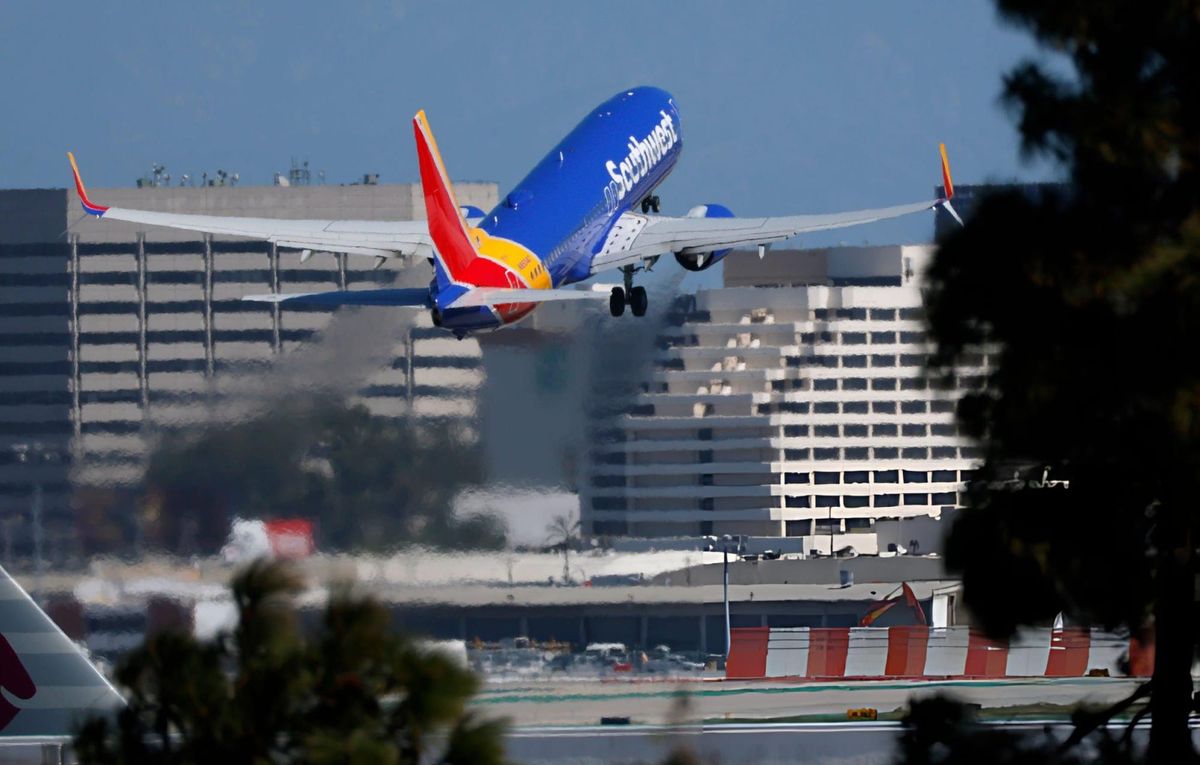
Southwest Airlines returned to profit in the first quarter of 2026, reporting net income of $227 million and earnings per share of $0.45 on record revenue of $7.25 billion — a swing of $376 million from the $149 million loss posted in the same period a year earlier. Operating margin reached 4.6 per cent, an improvement of 8.1 percentage points year-on-year. The result represented the highest adjusted net margin among large US airlines in the quarter, according to Southwest's own assessment.
The numbers validate, in one quarter, the commercial logic of a transformation programme that Southwest has spent 18 months and considerable reputational capital implementing. Assigned seating, bag fees, extra legroom pricing, a restructured loyalty programme — each of these changes broke with the open-boarding, bags-fly-free model that Southwest had operated for five decades and that its customers had come to regard as definitional. Approximately 60 per cent of customers upgraded from the base product in Q1 2026, against roughly 20 per cent in 2025. Revenue per available seat mile rose 11.2 per cent year-on-year on capacity growth of just 1.5 per cent; the airline is generating materially more revenue from roughly the same amount of flying.
Fuel complicates the story
The profit was achieved despite the fuel environment. Southwest paid $2.73 per gallon for fuel in Q1 2026, above its prior guidance of approximately $2.40, adding $164 million in fuel expense and representing an approximate $0.22 headwind to EPS. Southwest absorbed approximately one month of war-elevated fuel costs before the quarter closed on 31 March. The full weight of elevated fuel costs falls in Q2.
Southwest guided Q2 fuel at $4.10 to $4.15 per gallon — more than 50 per cent above what it paid in Q1. Against that backdrop, Q2 adjusted EPS guidance of $0.35 to $0.65 came in below the analyst consensus of $0.55, which explains the stock's 3.96 per cent decline on results day despite a profitable quarter. The market is not questioning whether the transformation worked. It is questioning whether the fuel shock absorbs the margin that the transformation created.
The full-year $4.00 EPS guidance, set in January, was not updated. Southwest's press release stated that updating the target "would not be productive at this time" and that achieving it "would require lower fuel prices and/or stronger revenue performance to offset higher fuel expense." That is a guidance hold in language rather than in mathematics; the $4.00 figure was constructed on a fuel assumption that the war has rendered obsolete, and the airline's refusal to withdraw it formally does not make it achievable at current prices.
What the transformation has and has not changed
Southwest ended the quarter with 800 aircraft after receiving 10 Boeing 737-8 deliveries and retiring 13 aircraft. It expects 66 Boeing 737-8 deliveries and approximately 60 retirements in 2026, ending the year with a modestly larger but meaningfully younger and more fuel-efficient fleet. The airline also announced the suspension of operations at Chicago O'Hare and Washington Dulles in June — two legacy slots that reflect the network rationalisation accompanying the product overhaul.
Southwest returned over $1.3 billion to shareholders through share repurchases and dividends in the quarter — a capital allocation decision that signals board confidence in the transformation's durability. It also signals that the balance sheet, with $3.33 billion in cash and equivalents, is being managed as though the fuel shock is temporary rather than structural.
That assumption is the operative bet in every line of the Q2 guide. Southwest has no fuel hedge; the programme was terminated in early 2026. Q2 results will be the first full-quarter read on what the transformation model produces when fuel costs double against a year-over-year comparison period when the carrier was still loss-making. Unit revenues are expected to rise 16.5 to 18.5 per cent year-on-year in Q2, which is an extraordinary revenue growth rate; whether it is large enough to absorb the fuel cost increase at $4.10 per gallon is the question Q2 results in July will answer.
The comparison with its peers
The US airline earnings season has now produced four reads: Delta withdrew full-year guidance; United held it conditionally while cutting capacity; American reported a loss with record revenue growth; Southwest held its full-year target without updating it. Each carrier's Q1 outcome reflects the position it entered the year with and the revenue model it has built. Southwest's transformation has produced the most dramatic year-on-year improvement of the four — an $0.71 per share swing from loss to profit — in a quarter where only one month of war pricing was absorbed. The question that differentiates it from the others is simpler: the transformation created margin, the fuel shock is consuming margin, and the net result in Q2 depends on which force is larger.
CEO Bob Jordan told reporters on Wednesday that demand remains strong in every sector. The Q1 numbers support that claim. The Q2 guide suggests the airline is not yet certain that demand strength is large enough to offset the fuel hit.