Singapore, Cathay and Korean Air are filling the seats that Emirates and Qatar Airways cannot sell
Singapore Airlines filled 93.5% of its European seats in March. Cathay Pacific carried 24% more passengers year-on-year. Korean Air posted a record quarter with European revenue up 18%.

For two decades, the geography of Europe-to-Asia aviation was settled. Passengers flew west to east via Dubai, Doha or Abu Dhabi, connecting through terminals that the Gulf carriers had built into the most efficient transfer infrastructure in the world. Emirates, Qatar Airways and Etihad together carried roughly one third of all Europe-Asia passengers; on routes between Europe and Australia, New Zealand and the Pacific Islands, their combined share exceeded half. The business model was elegant, the growth compounding and the competitive threat to Asian and European legacy carriers persistent enough to generate years of subsidy complaints in Brussels and Washington.
The Iran war ended that arrangement.
Before the conflict began on 28 February, Emirates, Qatar Airways, and Etihad together accounted for approximately one third of passenger traffic between Europe and Asia, and carried more than half of all passengers flying from Europe to Australia, New Zealand and the Pacific Islands, according to aviation data firm Cirium. That capacity did not disappear gradually. It vanished almost overnight as Iranian airspace closed, Gulf airspace came under restriction, and the EASA conflict zone bulletin grounded European carrier operations across the region. The passengers who had been routing through Dubai and Doha needed somewhere else to go. Singapore, Hong Kong and Seoul provided the answer.
Three carriers, one quarter, one conclusion
The March 2026 traffic releases from Singapore Airlines, Cathay Pacific and Korean Air tell the same story from three different hubs, with numbers precise enough to make the structural argument without embellishment.
Singapore Airlines Group's passenger load factor reached 90.6 per cent in March 2026, with the SIA mainline carrier posting a monthly record of 90.3 per cent. The group attributed the performance explicitly to spillover Europe-bound traffic as capacity through Middle East air hubs was affected by the ongoing conflict. Seat occupancy on Singapore Airlines' European flights jumped to 93.5 per cent in March, up from 79.9 per cent a year earlier — the sharpest regional gain across the entire network. A 13.6 percentage point improvement in load factor on European routes in a single month is not a seasonal fluctuation; it is a demand transfer.
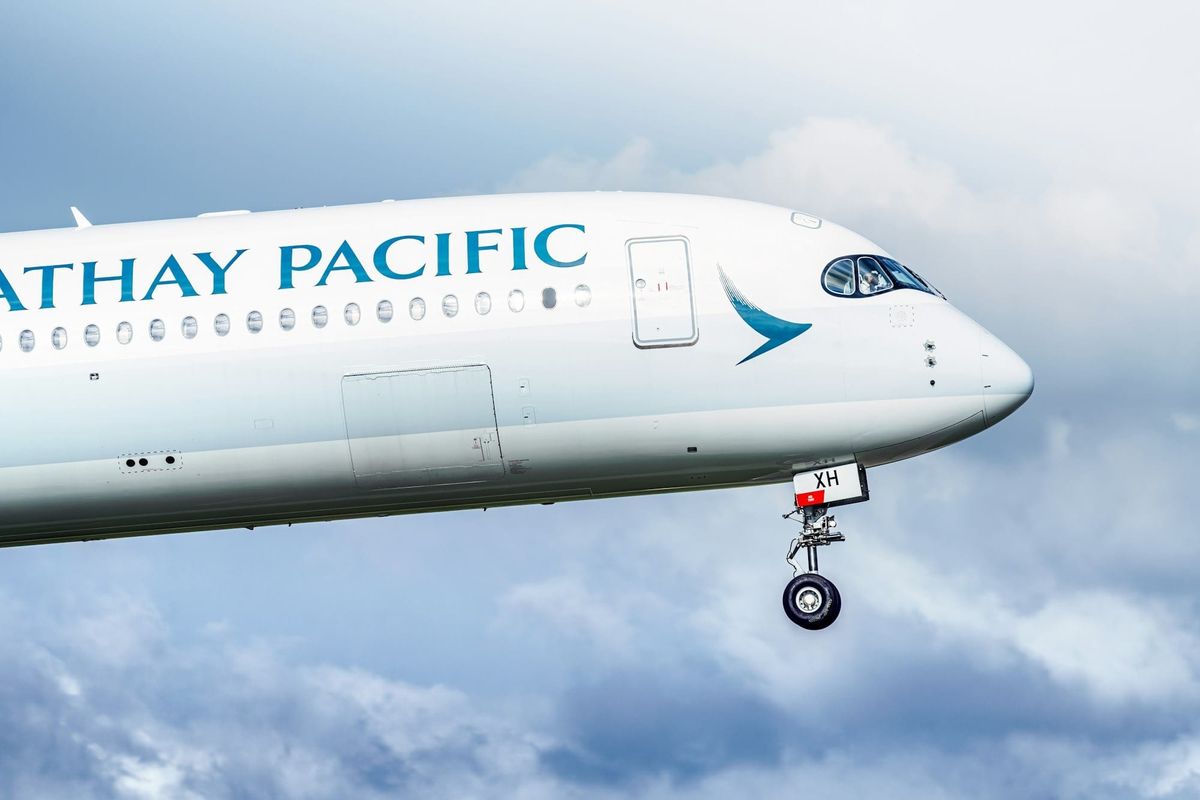
Cathay Pacific's March figures are consistent. The Hong Kong carrier carried 24 per cent more passengers year-on-year in March, with available seat kilometres growing 9 per cent — meaning traffic demand grew materially faster than deployed capacity, driving the load factor to 92.2 per cent, a gain of 9.5 percentage points on March 2025. Cathay's Chief Customer and Commercial Officer Lavinia Lau confirmed the mechanism directly in the airline's official traffic release, stating that the Middle East situation had shifted demand towards other aviation hubs and generated robust volumes on Cathay's flights, with additional capacity mounted to Europe in March and April to meet an upsurge in demand as passengers prioritised alternative routings.
Korean Air's first-quarter regulatory filing, published on 13 April, supplies the financial translation of what the load factor data implies. The Seoul-based carrier reported record first-quarter revenue of KRW 4.5151 trillion, up 14 per cent year-on-year, with operating profit rising 47 per cent to KRW 516.9 billion — its strongest first-quarter performance on record. The airline cited increased demand between Europe and Asia due to the Middle East conflict as a contributing factor, with European passenger revenue rising 18 per cent year-on-year. Korean Air added that it expects strong transit demand to continue, directly attributing the outlook to decreased market supply from Middle East carriers.
The question the numbers raise
Three carriers posting record or near-record European load factors in the same month, each citing the same cause, constitutes evidence of a demand transfer rather than coincidental growth. The question the traffic data does not answer, and that the airlines themselves are careful not to claim, is whether the transfer is temporary or structural.
Australia-Middle East traffic was down 77 per cent year-on-year in March, according to air traffic control manager Airservices Australia, as services were rerouted via alternative hubs. Qantas has redeployed capacity from US and domestic routes to expand flights to Paris and Rome. Virgin Atlantic launched a daily London-Seoul service on 29 March 2026, capturing demand that would previously have routed via the Gulf. These are not temporary schedule adjustments; they are network planning decisions made in response to a demand environment that has materially changed.
The Gulf carriers' own capacity constraints reinforce the picture. Qatar Airways has parked its A380 fleet through May with a June return planned on five routes. Cathay has suspended flights to Dubai and Riyadh until 30 June. Cathay's freighter services to those cities also remain suspended until 31 May. Each suspended service is a passenger who has rerouted and who may not revert to their previous routing when service resumes, particularly if fares on the Gulf hub itinerary carry a war-risk premium or if the reliability of the corridor remains uncertain.
The passenger behaviour literature on routing stickiness is clear: travellers who discover an alternative routing that works tend to retain it, particularly on high-frequency business routes where schedule reliability matters more than price. Singapore Airlines, Cathay and Korean Air are building new customer relationships on the back of a crisis; whether those relationships survive the crisis resolution depends on how quickly the Gulf carriers restore competitive fares and schedules, and how aggressively the Asian carriers price to defend the share they have gained.
The cost and windfall
The demand transfer would constitute an unambiguous financial windfall for Asian carriers were it not for the fuel shock that created it. Jet fuel at $197.83 per barrel, the global average for the week ending 10 April, against $99.40 per barrel for the week ending 27 February, means that flying more passengers on fuller aircraft is simultaneously more expensive on a per-flight basis than at any point in recent history. The demand surge and the cost surge are inseparable consequences of the same event.
Cathay has been candid about the constraint. Lavinia Lau stated that fuel surcharge adjustments had not been sufficient to mitigate the increased costs, and that the airline had been compelled, as a last resort, to consolidate approximately 2 per cent of Cathay Pacific's total passenger frequencies and around 6 per cent of HK Express frequencies between mid-May and the end of June. A carrier simultaneously posting 92 per cent load factors and cutting capacity is not a paradox; it is a carrier flying only the routes where the yield on the transferred demand exceeds the unhedged fuel cost on each departure.
Singapore Airlines holds a partial hedge position that limits its near-term exposure. Korean Air's fuel hedging position for the full year has not been disclosed at the specificity of its European peers, though the airline has signalled it expects external uncertainties, including high oil prices, to weigh on second-quarter performance. The implicit acknowledgement that the Q1 record was partially a timing benefit, captured before the fuel cost increase was fully absorbed into forward bookings.
What comes next
The Islamabad talks and the ceasefire calendar determine how long the demand transfer continues. A durable resolution that returns Gulf carrier capacity to pre-war levels within weeks would compress the Asian carriers' European load factor advantage quickly; the routes exist, the aircraft are available, and the Gulf hub model is operationally capable of rapid restoration. A prolonged disruption running into the summer peak, the scenario that IATA's end-of-May warning for European fuel supply implies as a real possibility, would extend the period during which Singapore, Hong Kong and Seoul function as the default Europe-Asia routing, deepening the customer relationships and network capacity investments that would make some share transfer permanent.
Korean Air has signalled its intentions clearly, stating in its Q1 filing that it plans to focus on attracting overseas-origin and transit passengers as a structural priority to offset sluggish outbound Korean demand. That is not crisis management language; it is a medium-term competitive strategy, articulated in a regulatory filing, based on a demand environment that the war in Iran has created and that Korean Air intends to retain, whether or not the Gulf carriers fully recover.
The Gulf hub model is not broken. Emirates and Qatar Airways have survived worse and possess the balance sheet depth and sovereign backing to restore their networks within a quarter of full operations resuming. What has changed is that three Asian carriers now hold a record of performance on European routes, a set of new customer relationships developed under pressure, and a strategic motivation to compete for Europe-Asia traffic that the pre-war equilibrium had not given them.
For investors tracking Singapore Airlines, Cathay Pacific Holdings and Korean Air through the remainder of 2026, the load factor and yield data on European routes is the number to watch; it will indicate whether the demand transfer is unwinding as Gulf capacity returns or whether the competitive map of Europe-Asia long-haul has been durably redrawn.