Lufthansa loses its final appeal on €6 billion Covid bailout
The EU's Court of Justice dismissed Lufthansa's final appeal on Thursday, upholding the annulment of the European Commission's approval of its €6 billion Covid bailout. Lufthansa won five of six appeal grounds. The sixth was inadmissible. That was enough to end it.

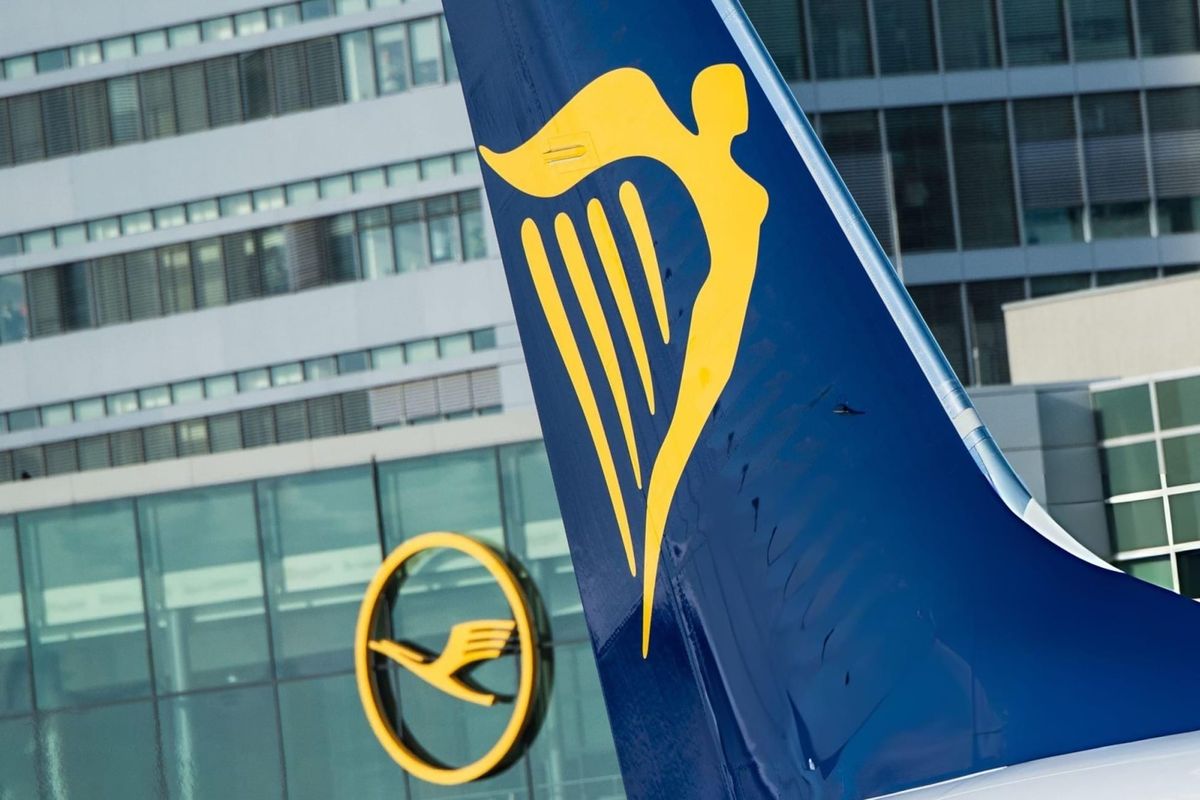
The European Court of Justice dismissed Lufthansa's appeal on Thursday, upholding a 2023 General Court ruling that annulled the European Commission's approval of the €6 billion recapitalisation the German state provided during the Covid pandemic. The court stated its finding without qualification: "The Court of Justice dismisses Lufthansa's appeal and thus upholds the General Court's ruling." The legal chapter on the original 2020 approval is closed. What opens now is a Commission investigation that will reassess the aid from the beginning.
The ruling was a narrow technical defeat rather than a wholesale rejection of Lufthansa's arguments. The court agreed with Lufthansa on five of the six grounds of appeal against the 2023 General Court ruling. The calculation of the conversion rate of €1 billion of Germany's silent participation into Lufthansa's shareholding proved sufficient to uphold the annulment in its entirety. The court's "all or none" approach meant that success on five grounds was worthless without success on the sixth. Lufthansa did not contest the General Court's calculation of the outcome on that point, which rendered its appeal on it inadmissible. One inadmissible ground, in a case decided on the basis that all grounds must be well-founded, was enough.
What the aid comprised
The recapitalisation was notified to the European Commission in June 2020 and cleared without a formal investigation. The measure comprised a €5.7 billion silent participation, two separate financial instruments, plus a €306 million equity participation. The Commission approved it as compatible with EU state aid rules under the Covid Temporary Framework, which relaxed normal competition standards to allow governments to support companies through the pandemic. Ryanair and Condor challenged that approval in the General Court in 2021. The General Court upheld the challenge in May 2023, finding that the Commission had infringed the Temporary Framework on multiple counts; Lufthansa appealed to the Court of Justice; Thursday's judgment ends that process.
Lufthansa had already repaid the contested aid in full by the end of 2022, replacing the state funds with its own debt and other financing. There is accordingly no immediate requirement to return money. The German state's Economic Stabilisation Fund sold its remaining stake in Lufthansa in September 2022 at a profit of €760 million. The financial transaction is complete. The legal classification of whether it was lawful is what Thursday's ruling has definitively addressed.
The €200 million Ryanair wants back
Ryanair welcomed the ruling and immediately called for Lufthansa to return €200 million in benefits, with a spokesperson stating: "Today's CJEU judgment again confirms what was obvious from the start: Germany's €6 billion Covid bailout of Lufthansa was illegal state aid that distorted competition. While efficient airlines were forced to survive through Covid on their own resources, Lufthansa was handed a €6 billion benefit by the German government, which once again rewarded German inefficiency, damaged competition, and hurt consumers."
The €200 million figure refers to the quantified benefit Ryanair attributes to the aid arrangement beyond the principal amount already repaid; it is not an additional repayment of the original €6 billion, which Lufthansa has already settled. Whether and how much Lufthansa would be required to pay is a matter for the Commission's ongoing investigation rather than a consequence of Thursday's ruling directly.
Ryanair's characterisation of Lufthansa as inefficient is not a legal argument; it is a competitive one. The airline has brought similar cases across Europe against aid provided to Air France, SAS and other flag carriers during the pandemic, constructing a systematic legal strategy to establish that competitors received advantages Ryanair was denied. The Lufthansa ruling is the most significant success of that campaign to date, given the scale of the aid and the prominence of the recipient.
What the Commission investigation means
Lufthansa said it would engage constructively with the Commission's investigation, which has been ongoing since 2024 and can now take the court's ruling into account. The investigation will reassess the aid against the conditions set out in the Temporary Framework; specifically whether Lufthansa's eligibility was properly assessed, whether the incentive mechanism for the German state to exit its shareholding was adequate, whether the conversion price of the €1 billion silent participation was appropriate, and whether the structural commitments imposed on Lufthansa, including slot divestitures at Frankfurt and Munich, were sufficient to address its dominant market position. The Commission will also examine whether Lufthansa's dominance at Düsseldorf and Vienna was adequately addressed in the original approval.
The investigation does not impose any immediate financial penalty. Its outcome, which could take years, may result in a new Commission decision that either validates the aid on revised terms, imposes additional conditions or requires partial recovery. The last of those scenarios is what Ryanair is pressing for and what Lufthansa's legal team will be working to prevent.
The context that sharpens the timing
Thursday's ruling arrived on the same week that Lufthansa announced the cancellation of 20,000 short-haul flights through October, the permanent closure of Lufthansa CityLine and the retirement of six long-haul aircraft; the combined response to a fuel crisis that has consumed the airline group's operational planning since late February. Europe's largest airline group is simultaneously managing an acute operational crisis driven by external events and a legal reckoning driven by decisions made six years ago.
The two are unrelated in cause. They are not unrelated in context. Lufthansa enters the Commission's investigation as a group that has cut capacity, cancelled flights and accelerated restructuring under fuel price pressure; with a pilot union dispute unresolved; with the CityLine closure generating 2,000 redundancies; and with Q1 2026 results due on 5 May that will be read against the most difficult operating backdrop the group has faced since the pandemic itself. The Commission's reassessment of how Lufthansa survived that pandemic will run in parallel with its efforts to navigate the current crisis.
Lufthansa's statement that it will engage constructively in the process is the correct and only available response. The legal options are exhausted. The Commission investigation is the arena in which the question of what, if anything, is owed will now be decided.