Lufthansa beats forecasts but €1.7bn fuel hit looms
Lufthansa beat Q1 forecasts with a €612mn adjusted EBIT loss on record €8.7bn revenue — but warned of a €1.7bn fuel cost increase in 2026 and said full-year headroom has largely gone.

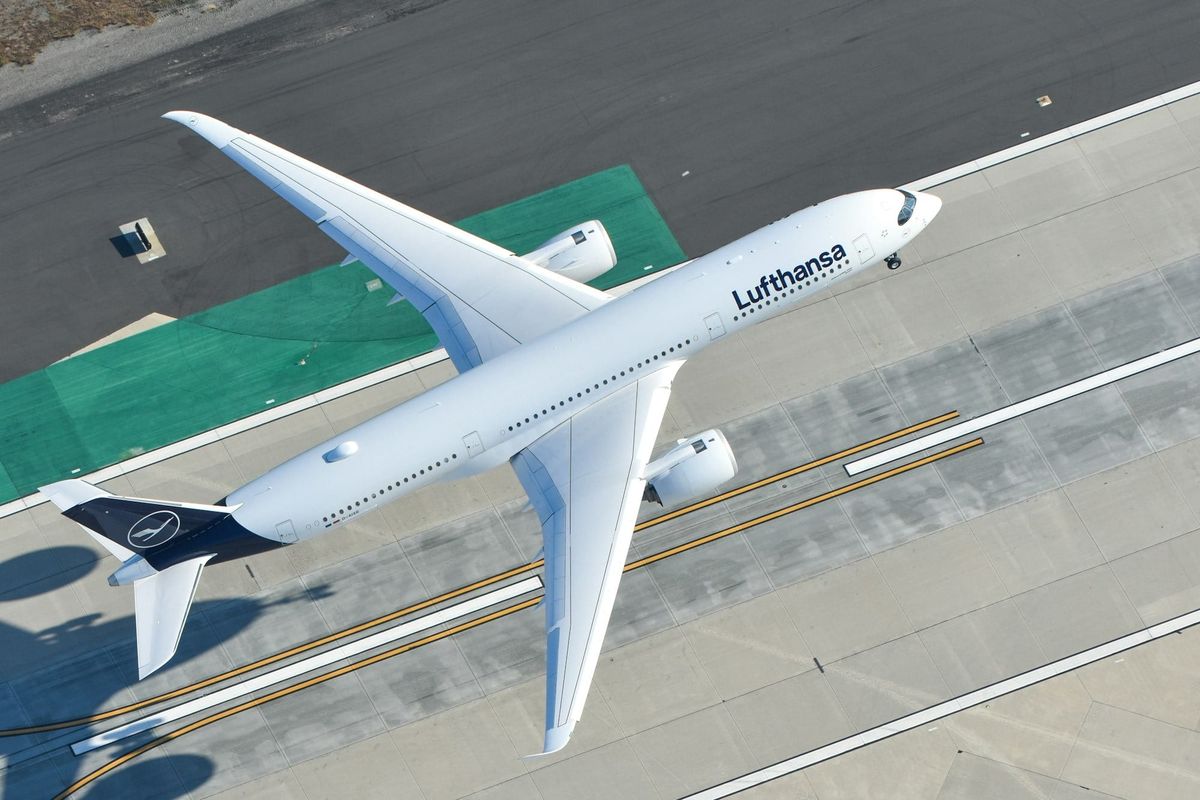
Lufthansa Group reported a better-than-expected first-quarter operating loss on Wednesday, with record revenue and disciplined hedging shielding results from the worst of the jet fuel shock — but the bill for the rest of the year is arriving fast.
The group posted an adjusted EBIT loss of €612mn in the January to March period, beating a company-compiled analyst consensus of a €659mn loss and improving sharply on the €722mn loss recorded in the same quarter of 2025. Revenue rose 8 per cent year on year to €8.7bn, a first-quarter record, on capacity that was broadly flat — available seat kilometres grew just 0.5 per cent.
Net loss also improved materially, narrowing from €885mn to €665mn year on year. Load factor reached 81.9 per cent, with demand visibly accelerating in March as the Middle East conflict disrupted capacity across the region and pushed travellers toward European hub connections.
The numbers look solid on the surface, but the full weight of the fuel shock had not landed in the first quarter. CFO Till Streichert noted that 60 per cent of March fuel consumption settled at prices locked in during prior months, meaning the true cost of the Iran conflict-driven price spike will register far more heavily in Q2 and beyond.
Lufthansa now estimates its 2026 fuel bill at approximately €8.9bn, €1.7bn above its prior guidance, which Streichert called "the single most relevant cost headwind" for the remainder of the year. The group has hedged approximately 83 per cent of its 2026 fuel requirement, but has temporarily suspended regular hedging activity since early March due to market volatility, leaving 2027 coverage at roughly 36 per cent.
To absorb the shock, Lufthansa has moved quickly on the network and fleet. The group has already cut 20,000 short-haul flights through October, is removing 27 CityLine aircraft from schedules, accelerating the retirement of A340-600s, and grounding a portion of its 747-400 fleet. Capacity growth guidance has been revised from close to 4 per cent to 0 to 2 per cent for the full year, with continental flying expected to shrink slightly.
Outside of passenger operations, the group's diversified structure provided meaningful support. Lufthansa Cargo expanded capacity by 7 per cent in the quarter and posted an adjusted EBIT of €83mn. Lufthansa Technik grew external revenue by 19 per cent, though material and personnel shortages held its adjusted EBIT broadly flat at €158mn against €161mn a year earlier.
Labour disruption remains a parallel risk. Strike costs have totalled approximately €200mn so far across Q1 and Q2, with roughly €150mn attributable to six strike days in the current quarter alone. Lufthansa issued two profit warnings in 2024 tied to labour costs; the group has not yet resolved all outstanding wage disputes.
Lufthansa maintained its full-year 2026 guidance of adjusted EBIT significantly above its 2025 result of €1.96bn, implying more than 10 per cent growth, but Streichert was explicit that the prior headroom above that threshold has "largely gone." The guidance is conditional: the CFO stated it holds only "provided there are no fuel supply bottlenecks or further strikes."
Goldman Sachs downgraded Lufthansa to sell following the results, citing the risk of a €1bn fuel hedge loss flowing through to 2026 earnings. Morgan Stanley also cut its rating on fuel cost concerns. CEO Carsten Spohr struck a more resilient tone, pointing to the group's multi-hub structure and above-average hedging as buffers, and said Lufthansa would "emerge from this crisis even stronger."