Frontier beats guidance as Spirit's exit clears the field
Frontier Airlines reported record adjusted revenue of $1.065bn in Q1 2026, beating guidance on unit revenue, while a $272mn reported net loss was driven by $212mn in non-recurring fleet and regulatory charges.

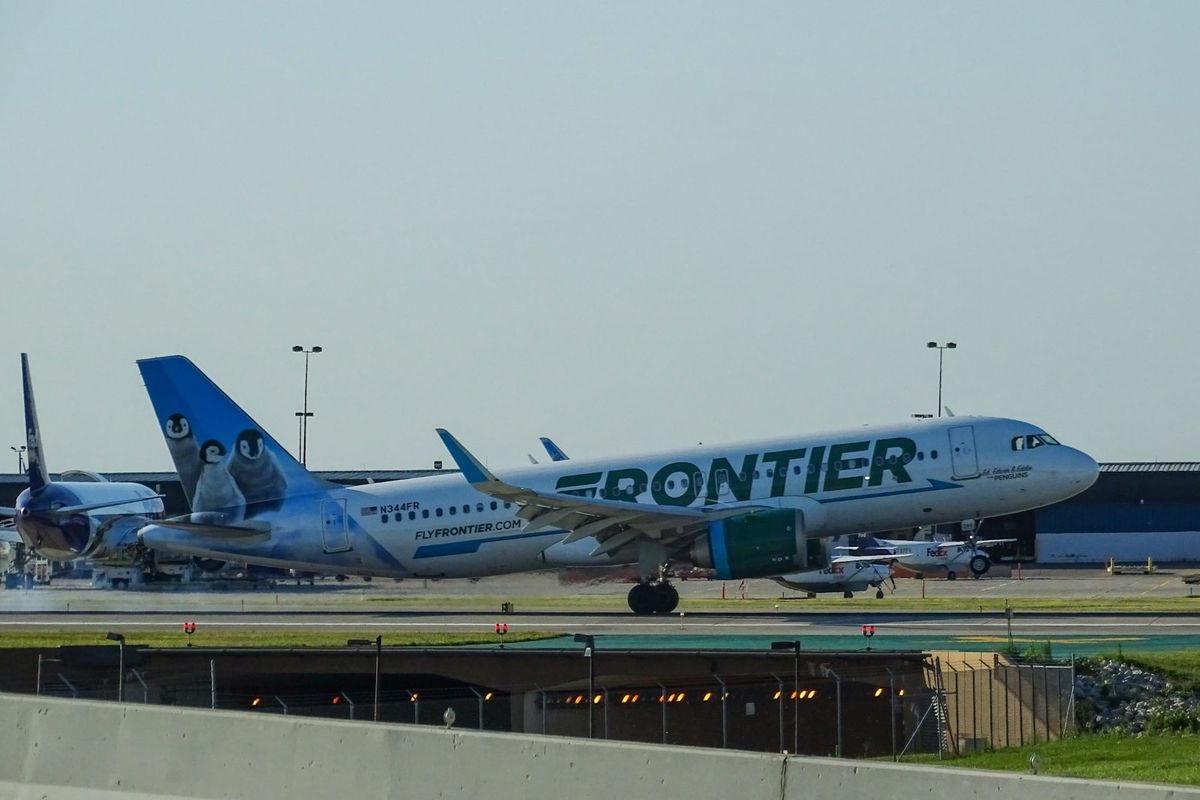
Frontier Airlines reported record adjusted revenue of nearly $1.1bn in the first quarter of 2026, as a sharp improvement in unit revenue offset the airline's worst reported net loss in recent years — a result shaped almost entirely by two large non-recurring charges unrelated to core trading performance.
Adjusted revenue rose 17 per cent year on year to $1.065bn despite a 1 per cent reduction in capacity, with the improvement driven by a 17 per cent increase in stage-length adjusted revenue per available seat mile, which reached 10.29 cents from 8.81 cents in the same quarter of 2025. The adjusted net loss was $68mn, or $0.30 per share, better than guidance of a $0.32 to $0.44 per share loss.
The reported net loss of $272mn, or $1.18 per share, was shaped by $212mn in charges: a $139mn non-cash charge related to the early termination of leases on 24 Airbus A320neo aircraft returned to lessor AerCap ahead of schedule, and a $73mn reserve following a court ruling on the remittance of Transportation Security Administration fees for unused travel, covering prior years subject to audit. Both charges are excluded from the adjusted figures that Frontier uses as its primary operating metric.
Total liquidity stood at $974mn at the end of March, $100mn above the year-end 2025 position.
The fleet restructuring is the centrepiece of a broader rightsizing programme Frontier has been executing since late 2025. Alongside the 24 early lease terminations, the airline reached an agreement with Airbus to defer delivery of 69 A320 family aircraft originally scheduled for 2027 to 2030, pushing those deliveries to 2031 to 2033. The combined effect holds Frontier's fleet in the mid-170s through 2026 and 2027, and management has projected the fleet changes will generate roughly $90mn in annual rent savings as part of a broader $200mn cost reduction target by 2027.
Fuel expense totalled $268mn in the quarter, at an average of $2.88 per gallon — 13 per cent higher than the $2.55 per gallon recorded in the first quarter of 2025. Frontier generated 106 available seat miles per gallon in the quarter, a fuel-efficiency advantage of over 40 per cent relative to the other major US carriers, a structural advantage that becomes materially more valuable as jet fuel prices remain elevated following the Iran conflict.
The results arrive three days after the liquidation of Spirit Airlines, which ceased operations on 2 May. The two carriers had overlapped on a substantial share of domestic US routes, principally leisure markets in Florida, Nevada and the south-east, but Frontier has been absorbing capacity vacated by Spirit's retreat through its second bankruptcy since late 2025. AirInsight noted on Tuesday that Frontier already serves more than 100 former Spirit routes, and that Spirit's exit removes the floor pricing that had suppressed base fares in those markets.
For the second quarter of 2026, Frontier guided to an adjusted loss per share of $0.45 to $0.60, with the range reflecting continued jet fuel price uncertainty. US Gulf Coast jet fuel was trading at approximately $3.51 per gallon at the time of the quarterly guidance, down from a peak of $4.78 on 2 April but still 47 per cent above the $2.39 recorded on 27 February, the day before US-Israeli strikes on Iran.
Jimmy Dempsey, chief executive, said the results validated the airline's strategy in the face of rising fuel costs, and that Frontier remained focused on rightsizing the fleet, cost discipline, operational reliability and customer loyalty. The company did not provide full-year earnings per share guidance, citing fuel volatility.