From Lahore to Geneva: meet IATA's new director general
Saadia Zahidi was born in Lahore to a geophysicist father who believed in his daughters' education and a mother who received none. On 23 July she became IATA's first female director general. A profile of the economist who will lead global aviation.

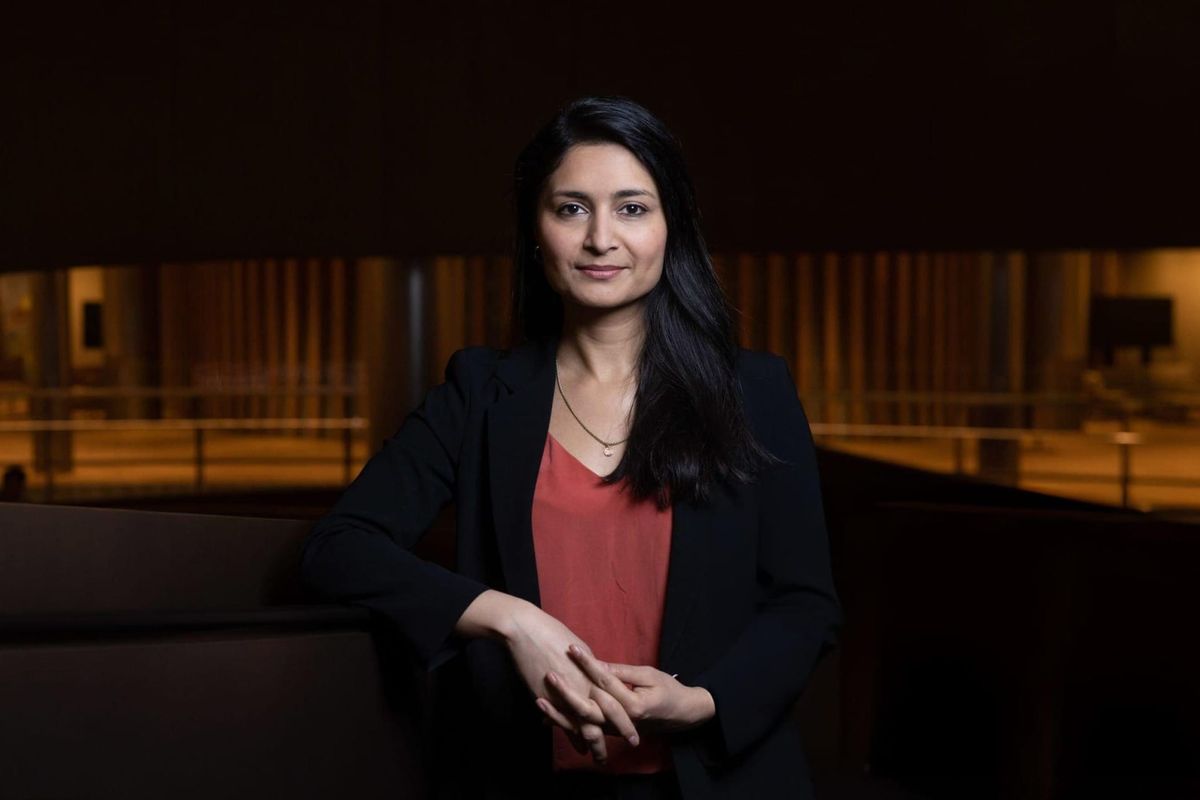
Saadia Zahidi was born in Lahore, Pakistan, the youngest of three sisters and a brother, into a family that made a quiet decision against the grain of their culture: her grandfather did not believe girls should be educated and her mother received no formal education at all. Her father, a geophysicist who was the first in his family to attend university, believed in his daughters' education and careers, suggesting at one point that Zahidi's sister might become a pilot because the Pakistan Air Force had just begun training women.
On 23 July 2026, the International Air Transport Association (IATA) appointed Saadia Zahidi as its ninth director general, effective 1 November 2026, making her the first woman to lead the organisation in its 80-year history. She is also the first director general in more than 40 years to come from outside the airline industry.
The journey from Lahore to the head of global aviation runs through Smith College in Massachusetts, the Graduate Institute in Geneva and Harvard, where she took a Master of Public Administration; she holds Pakistani and Swiss citizenship, speaks four languages and joined the World Economic Forum (WEF) as an economist in 2003. She spent the next 23 years rising to managing director and board member.
At the WEF she founded the Centre for the New Economy and Society and co-authors its Future of Jobs Report, Global Gender Gap Report and Global Risks Report, serving on the UN Secretary General's panel for Women's Economic Empowerment and the European Space Agency's High Level Advisory Group. In 2018 she published Fifty Million Rising, charting the rise of working women across the Muslim world and drawn partly from her own background; it was longlisted for the Financial Times and McKinsey Business Book of the Year.
The contrast with her predecessors is stark: Willie Walsh, who concludes his IATA tenure on 31 July 2026 before becoming chief executive of IndiGo, ran Aer Lingus, British Airways and IAG across a 25-year airline career, and his four immediate predecessors were all airline chief executives. The last IATA director general from outside the industry was Knut Hammarskjöld, a Swedish diplomat and nephew of UN Secretary General Dag Hammarskjöld, who led the organisation from 1966 to 1984.
IATA's chief financial officer Sandrine Le Borgne will serve as interim director general from 1 August through 31 October 2026, bridging the three-month gap between Walsh's departure and Zahidi's arrival.
The case for the appointment rests on what the IATA director general's role actually requires in 2026: managing IATA's internal technical services across approximately 330 member airlines requires operational credibility, while representing the industry to governments and multilateral institutions on policy questions is where Zahidi's 20 years at the WEF are directly applicable. It is also where Walsh's tenure was most consequential.
The reservation the industry will articulate is credibility on operational matters: when the IATA director general challenges a government's runway capacity policy, the standing to do so has historically derived from the director general's own airline background. Zahidi will need to build that credibility in a role that requires it immediately.
IATA chair Roberto Alvo described the appointment as bringing a "fresh perspective" at a time of "significant change," arguing that technology and geopolitics will reshape the industry and that Zahidi brings the right skills to articulate what aviation needs. For a woman whose own mother had no education and whose father dared imagine his daughter might one day fly, leading the organisation that represents the world's airlines is a different kind of arrival.