China Southern orders 137 Airbus jets in $21.4bn deal
China Southern Airlines and subsidiary Xiamen Airlines have agreed to purchase 137 Airbus A320neo jets at a list price of $21.4bn, as Beijing's state carriers consolidate fleet renewal around European aircraft while Boeing's China breakthrough remains tied to a Trump-Xi summit with no date set.

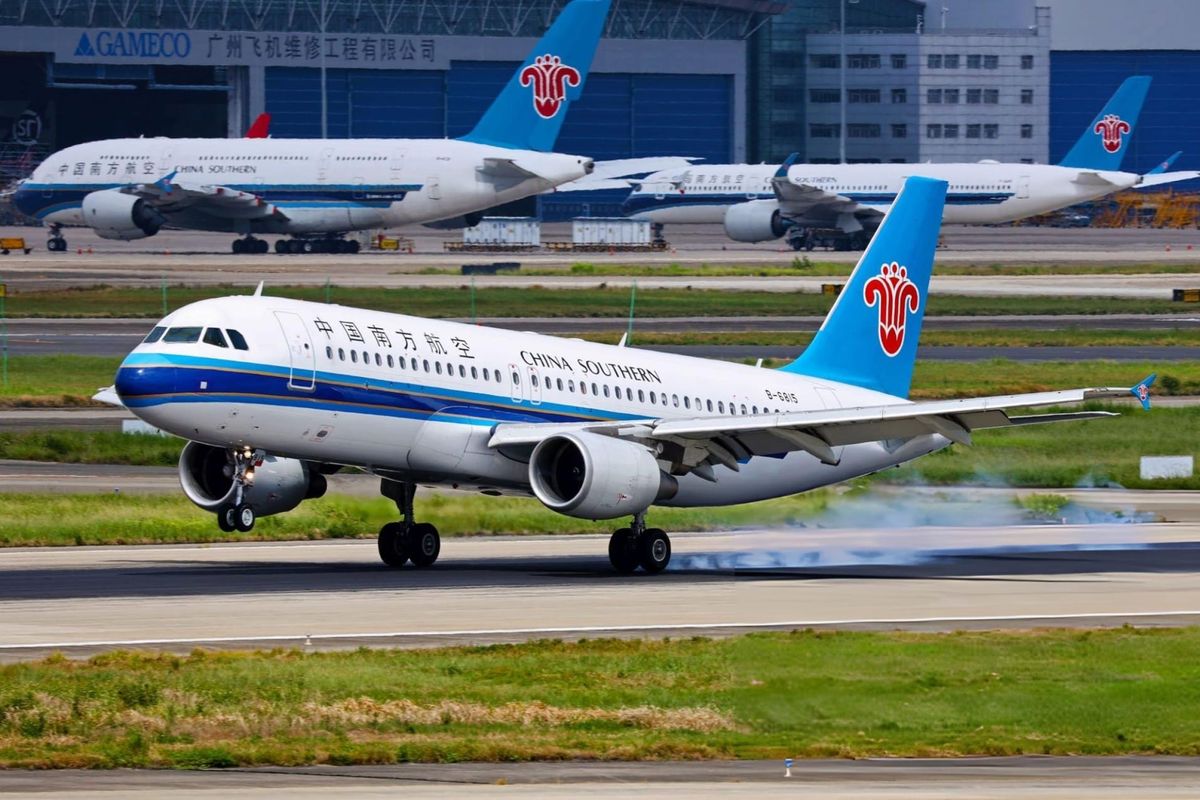
China Southern Airlines and its subsidiary Xiamen Airlines have agreed to purchase 137 Airbus A320neo family aircraft at a list price of $21.4bn, in the largest single Chinese narrowbody order of 2026 and the clearest sign yet that Beijing's state carriers are consolidating their fleet renewal around European rather than American jets.
China Southern will take 102 aircraft, with the remaining 35 allocated to Xiamen Airlines, in which it holds a 55% stake. Deliveries are scheduled between 2028 and 2032, seamlessly following on from a 96-aircraft order placed in July 2022. No engine selection has been disclosed; China Southern's existing A320neo fleet carries both Pratt & Whitney and CFM powerplants, while Xiamen operates CFM exclusively.
The deal lands against a pointed backdrop. Boeing chief executive Kelly Ortberg said last week that closing a major Chinese order would require support from the Trump administration, with any near-term deal effectively tied to a planned meeting between President Trump and Chinese President Xi Jinping. That meeting has been postponed since late February. While Washington and Beijing negotiate, Toulouse is writing contracts.
China Southern becomes the latest in a succession of Chinese carriers to commit to Airbus narrowbodies in 2026. China Eastern ordered 101 A320neo jets in March, Air China placed an order for 60, Spring Airlines signed for 30 and Juneyao Airlines for 25. Across these five deals alone, Airbus has secured commitments for more than 350 narrowbody aircraft from Chinese operators this year, at combined list prices running well above $50bn before customary discounts.
China carried more than 500 million air travellers in 2025, and China Southern's group fleet totalled 972 passenger and cargo aircraft at the end of that year. The A320neo aircraft ordered on Wednesday will expand the airline's capacity across three strategic corridors: the Guangdong-Hong Kong-Macau Greater Bay Area, the Beijing-Tianjin-Hebei region, and Belt and Road international routes.
Airbus has been building the infrastructure to support exactly this volume. The manufacturer opened a second A320 family final assembly line in Tianjin in October 2025, giving it ten such lines worldwide and positioning it to raise monthly production to 75 aircraft by 2027. The Tianjin expansion means a growing share of Chinese-destined jets will be assembled in China - a structural advantage that Boeing, which has no final assembly capacity on the mainland, cannot match on its own.
Airbus separately disclosed last week that an administrative issue had held up deliveries of nearly 20 aircraft to Chinese customers in the first quarter — an issue the manufacturer described as relating to the complexity of handing over aircraft with certain characteristics from a European type certificate to Chinese authorities, and not a geopolitical matter. Deliveries have since resumed.
Boeing's window to reclaim relevance in China remains open, in theory. Reports earlier this year suggested a potential deal spanning several hundred 737 MAX aircraft could be timed around a Trump-Xi summit. The summit has not been scheduled. In the meantime, China's three largest state carriers, China Southern, China Eastern and Air China, have each placed Airbus orders in 2026. The market is moving faster than the diplomacy.