American lands in Caracas for first time in seven years
American Airlines landed in Caracas on Thursday for the first time in seven years, resuming daily Miami service after the Trump administration lifted a 2019 ban. Return fares are running above $1,200, against $390–$900 via Bogotá, as the market tests whether demand justifies the route.

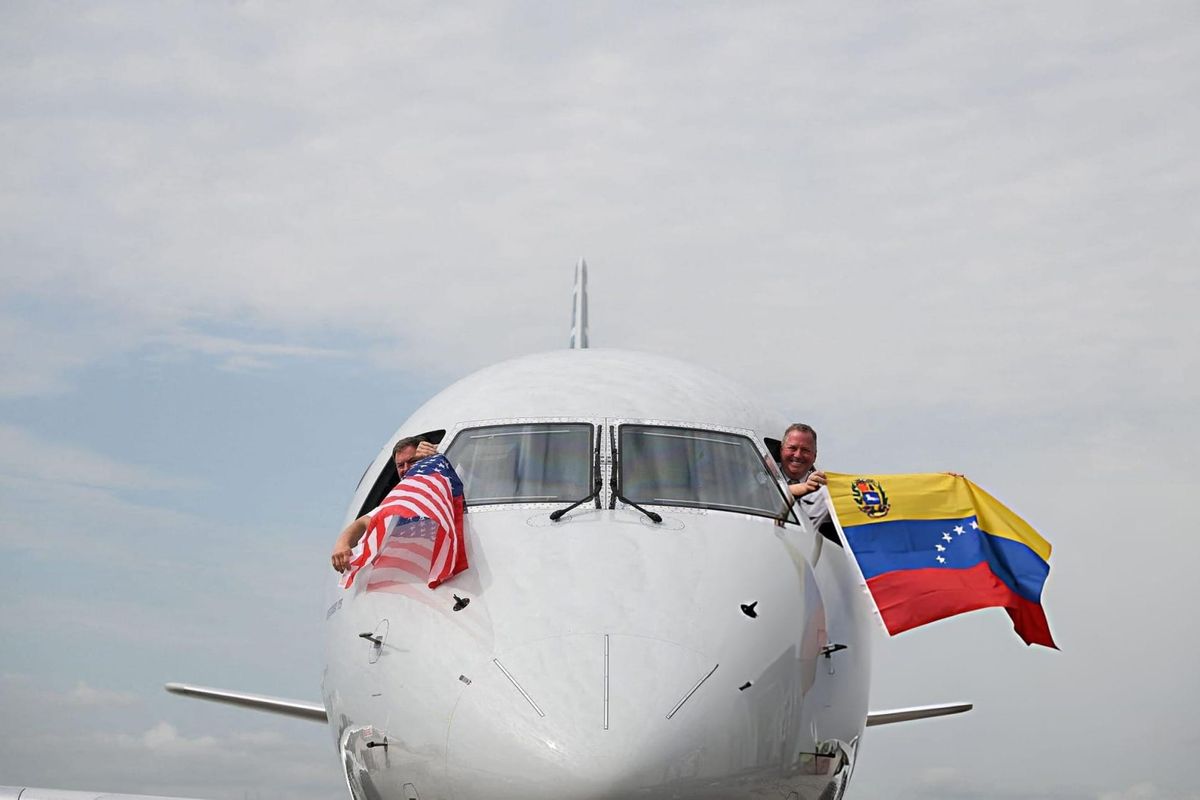
The first direct commercial flight between the United States and Venezuela in seven years touched down at Simón Bolívar International Airport on Thursday afternoon, ending a suspension that had outlasted two US presidents, one Venezuelan political crisis and a diplomatic rupture that once seemed permanent.
Flight AA3599, operated by Envoy Air on behalf of American Eagle using an Embraer E175, departed Miami at 10:11am ET on Thursday and arrived in Caracas roughly three hours later. American Airlines has served Venezuela since 1987 and was the largest US carrier in the country before the 2019 ban. It is now the first to return.
The route's revival is a direct product of a geopolitical reversal. US Transportation Secretary Sean Duffy lifted the 2019 suspension order in January 2026 after President Trump directed him to do so, and the Department of Transportation approved American's application in March. The Transportation Security Administration reviewed security procedures at Caracas airport the same month — a mandatory step before US carrier service could resume. The State Department also eased its Venezuela travel advisory from "Do Not Travel" to "Reconsider Travel" in March, citing sustained but reduced risks of crime, kidnapping and terrorism.
The backdrop is Washington's capture of former Venezuelan president Nicolás Maduro in January, which triggered the normalisation process. What was framed as a law enforcement operation has quietly become the foundation for a commercial reopening — the ribbon-cutting ceremony at Miami's gate, with Trump administration officials present, and passengers served coffee and arepas on board, was as much diplomatic theatre as airline operations.
American plans to add a second daily Miami–Caracas departure from 21 May, and has indicated a future Miami–Maracaibo service is also under consideration. Venezuela's transport minister said the country anticipates approximately 100,000 passengers a year on the restored services, around 8,000 per month, primarily serving the large Venezuelan diaspora in Florida.
The economics are more complicated than the ceremony suggested. Return fares for early May were showing above $1,200 on American's website, against $390–$900 round-trip via Bogotá on carriers such as Avianca. Until frequency increases and competition arrives, other carriers are watching American's load factors before committing. The Miami–Caracas nonstop will serve a narrow segment of travellers who can absorb the premium or have no other option.
The Department of Homeland Security said in a Federal Register notice in April that conditions in Venezuela no longer require the continued suspension of direct commercial flights, while conducting ongoing airport security assessments for other carriers seeking to begin service. That language leaves the door open for United, Delta or Latin American carriers to follow. Whether they do will depend on how American's early loads perform and how quickly ticket prices normalise. The route is back. The market still has to decide whether it was worth the wait.