Airbus delivers its worst quarter since 2009
Airbus delivered 114 aircraft in Q1, its worst quarter since 2009, as Pratt & Whitney engine shortages grounded finished jets on aprons across Europe. Revenue fell 7 per cent.


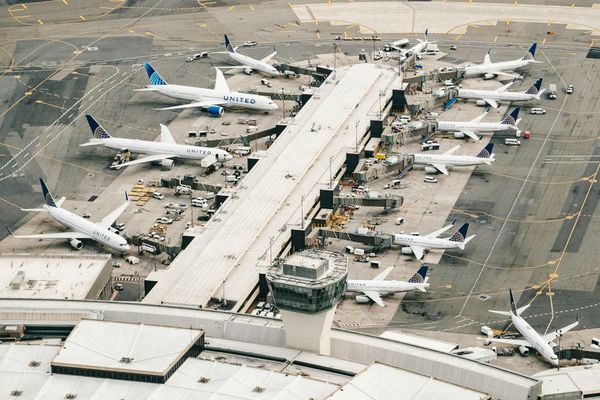
Airbus delivered 114 commercial aircraft in the first three months of 2026. A year earlier it delivered 136. The difference is one engine maker: Pratt & Whitney, whose troubled GTF powerplant has left dozens of finished A320neo jets sitting on aprons across Europe and North America, fully built, fully painted, and going nowhere.
The results that followed were predictable. Revenue fell 7 per cent to €12.7bn, with the commercial aircraft division down 11 per cent to €8.4bn. Adjusted operating profit more than halved to €300mn, missing what analysts had expected. Net income of €586mn beat the forecasters, but that was largely a function of investment revaluations rather than anything Airbus's factories produced.
Airbus receives pre-delivery payments from airlines throughout the manufacturing process, covering up to 30 per cent of an aircraft's purchase price before it leaves the factory. The largest single cash receipt on any aircraft lands only at delivery. When the factory keeps running at ramp-up pace while 22 fewer aircraft are handed over than planned, the spending races ahead of the final receipts. Free cash flow before customer financing was negative €2.49bn, against negative €310mn in the same quarter last year.
To hit its full-year delivery target of around 870 aircraft, Airbus needs to average roughly 252 deliveries per quarter across the remaining nine months. It just managed 114. That kind of acceleration happens every year, because production naturally ramps through summer and autumn, but the scale required in 2026 is at the upper end of what the company has ever managed.
Chief executive Guillaume Faury said the company is continuing its ramp-up "while navigating the shortage of Pratt & Whitney engines," adding that the operating environment remains complex. He also noted, for the first time in a results statement, that Airbus is watching the Middle East situation closely. That matters: airlines absorbing doubled fuel costs are less likely to take deliveries enthusiastically, and some may seek to push slots into later years.
The one division that had a good quarter was defence and space. Revenues there rose 7 per cent to €2.8bn, with adjusted operating profit nearly doubling. European governments have been spending on military hardware at a pace not seen since the Cold War, and Airbus is among the primary beneficiaries. Order intake in the division more than doubled year-on-year to €5bn. It is not enough to compensate for the commercial aircraft shortfall, but it is a meaningful offset.
Gross commercial orders totalled 408 aircraft in the quarter, against 280 a year earlier. Demand, in other words, is not the problem. Customers want Airbus jets. The Iran war has, if anything, sharpened appetite for new fuel-efficient narrowbodies — every airline paying four dollars a gallon for unhedged fuel has a very clear business case for replacing its older aircraft. The order book of 9,037 commercial aircraft represents more than a decade of work at current delivery rates.
The awkward comparison of the moment is with Boeing, which delivered 143 aircraft in Q1, its first quarterly delivery lead over Airbus since 2019. Boeing's commercial division is still loss-making; its factories are still in recovery. The lead says more about Airbus's Pratt & Whitney problem than it does about any structural shift in the manufacturing rivalry. When engine supply normalises, the underlying order book advantage Airbus holds will reassert itself. The question is when.
Full-year guidance remains unchanged: 870 deliveries, €7.5bn in adjusted operating profit, €4.5bn in free cash flow. The guidance assumes no additional disruptions to trade, air traffic or the supply chain. In the current environment, that caveat is carrying considerable weight.