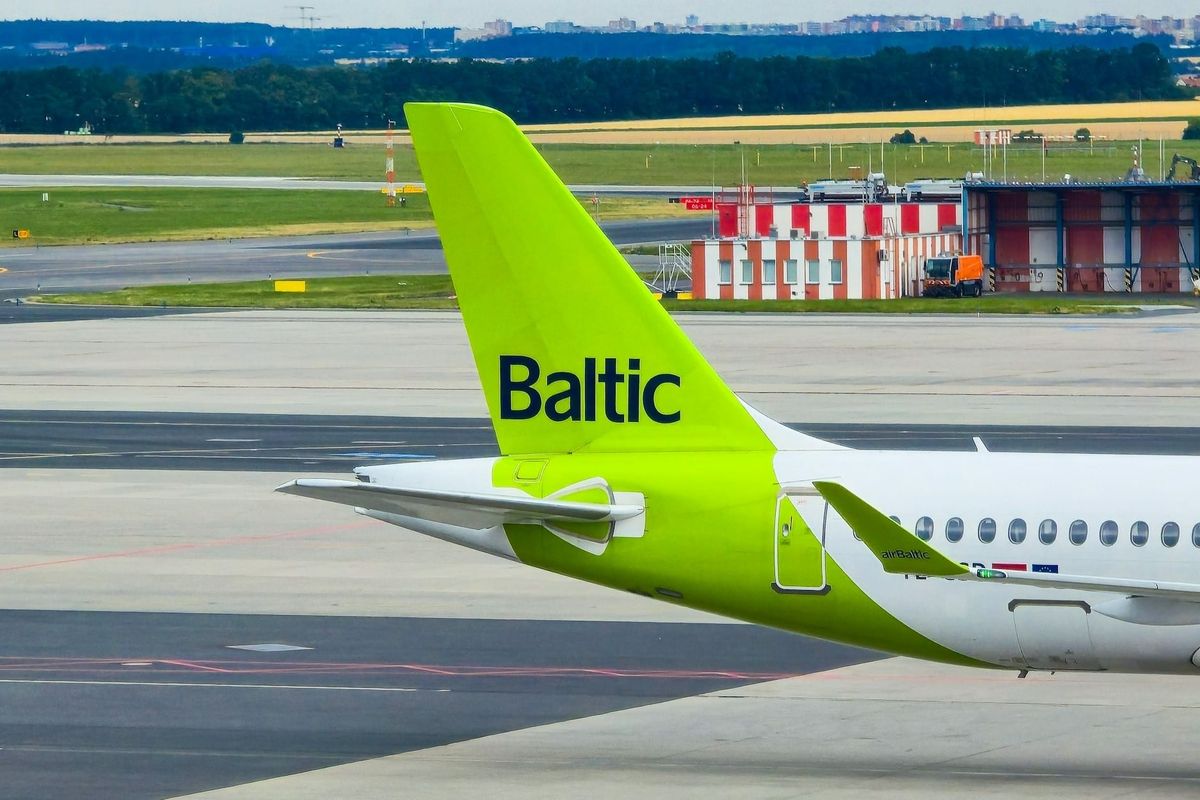
AirBaltic files for Chapter 11 as crises compound
airBaltic filed for Chapter 11 in New York on 14 September 2026 with €350mn in DIP financing secured at 12%. The carrier enters with €583.9mn in funded debt and €992.5mn in lease obligations. Pratt and Whitney is the largest unsecured creditor at $66.5mn.

€1 = $1.16
airBaltic filed for Chapter 11 bankruptcy protection in the United States Bankruptcy Court for the Southern District of New York on 14 September 2026, becoming the second airline to seek bankruptcy protection in connection with the Iran conflict fuel shock and the Pratt and Whitney geared turbofan engine crisis; Spirit Airlines liquidated and ceased all operations in May 2026. The airline said flights would continue as scheduled and existing tickets, reservations and loyalty benefits remain valid throughout the court-supervised process, which it expects to complete by June 2027.
The filing covers airBaltic's mainline operations, airBaltic Training and Baltijas Kravu Centrs, the carrier's cargo handling subsidiary. airBaltic has secured commitments for €350mn in debtor-in-possession (DIP) financing from Strategic Value Partners at an interest rate of approximately 12 per cent, subject to court approval; that rate compares with the 25 per cent interest rate attached to the emergency financing package the carrier had been seeking through its bondholders only days earlier, which Fitch analysts estimated would cost €156mn in the short term. The decision to file for Chapter 11 rather than pursue the bondholder route reflects the arithmetic of those two rates.
The scale of airBaltic's liabilities is now public through the court filing: the carrier enters Chapter 11 with €583.9mn in funded debt and €992.5mn in operating lease obligations, with its €456.8mn in senior secured bonds carrying a 14.5 per cent interest rate due in 2029. Pratt and Whitney is the largest unsecured creditor with a claim of $66.5mn, a figure that captures the financial consequence of the engine maker's powder metal inspection programme, which has grounded A220-300 aircraft across multiple operators and hit airBaltic hardest given its all-A220 fleet structure.
The Chapter 11 process will allow airBaltic to cancel or defer deliveries on a $3.5bn order for 40 additional Airbus A220-300 aircraft and $106.7mn in associated Pratt and Whitney engines. The Latvian government, which holds a 97.97 per cent stake following years of emergency equity injections totalling more than €394mn since 2020, will retain its controlling position through the restructuring; Latvia is not providing additional state funding as part of the process.
Thomas Hilden, who led Scandinavian Airlines through its own Chapter 11 proceedings from 2022 to 2024, said airBaltic is "targeting the same process" and that the framework gives the carrier the ability "to put their house in order." SAS emerged from Chapter 11 restructured, recapitalised and with a new fleet order; airBaltic's path through June 2027 will test whether the same template can work for a carrier whose structural problem is rooted in a single-engine, single-type fleet dependency that the restructuring alone cannot fully address.