airBaltic bondholders approve restructuring amid fleet cuts
AirBaltic bondholders approved debt restructuring on 17 August 2026, capitalising two interest payments as the carrier pursues a €325mn recapitalisation and cuts its fleet from 54 to 36 aircraft. The Pratt and Whitney GTF crisis is the root cause.

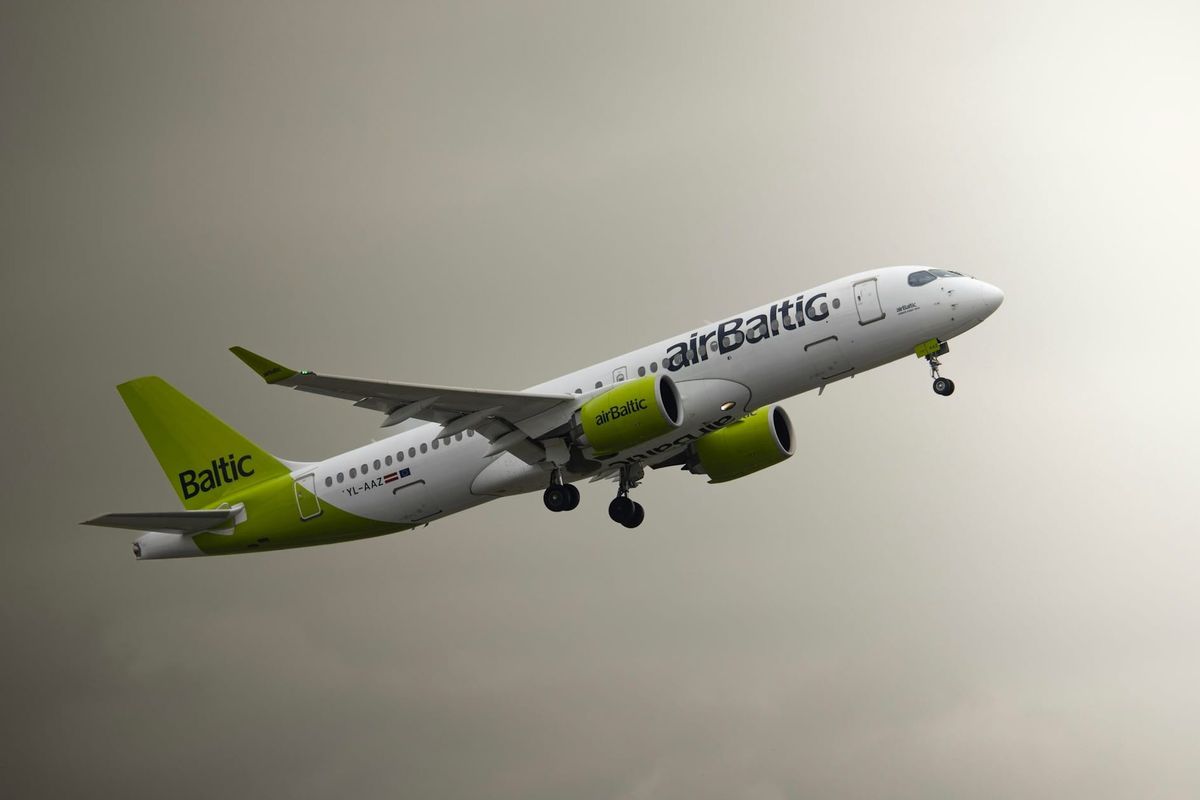
AirBaltic's bondholders voted on 17 August to capitalise two interest payments rather than receive them in cash, approving extraordinary resolutions that provide the Latvian carrier with critical near-term liquidity as it pursues a $354mn (€325mn) recapitalisation and prepares to cut its fleet from 54 to 36 aircraft by year-end.
The approved amendments provide for the capitalisation of the interest payments due on 14 August and 14 November 2026; the relevant interest payments will be added to the principal amount of the bonds rather than paid out in cash. Bondholders also approved a temporary waiver until 14 November 2026 of the minimum liquidity requirement, alongside flexibilisation of certain bond conditions including requirements relating to the Bond Service Reserve Account. The vote was a reconvened meeting after an initial attempt on 3 August failed to reach the required quorum.
The approved resolutions address the immediate cash position of airBaltic's €380mn ($415mn) 14.5 per cent interest bonds due in 2029, which have been at the centre of the carrier's liquidity crisis; the interest payment of $15mn (€13.775mn) due on 14 August has now been capitalised rather than paid. The next critical test is securing $246mn (€225mn) in interim financing to cover near-term requirements while the broader restructuring is implemented; that financing has not yet been secured.
AirBaltic expects to operate around 36 A220-300 aircraft by end 2026, down from its current fleet of 54, before growing gradually to approximately 40 by 2031, a dramatic retreat from the carrier's previous ambition to reach 100 aircraft. The revised plan targets higher utilisation of the smaller fleet and an expansion of year-round ACMI wet-leasing partnerships to maintain broadly stable scheduled capacity.
The restructuring plan cites Pratt and Whitney engine delivery constraints alongside moderating revenue growth and high costs from the conflicts in Ukraine and the Middle East as reasons for revising the business plan. AirBaltic operates an all-Airbus A220-300 fleet, which uses the Pratt and Whitney PW1500G engine exclusively; the inspection and repair programme that has grounded A220s and A320neo-family aircraft across multiple operators worldwide has hit airBaltic particularly hard given its single-type dependence.
Net leverage is projected to decline from 8.94 times in 2025 to approximately 4.8 times following the proposed recapitalisation at end 2026, and to 1.6 times by 2031. The Latvian government holds the large majority of airBaltic's shares, with Lufthansa Group holding a 10 per cent stake acquired through a €14mn convertible investment; the government has confirmed it intends to retain at least 25 per cent plus one share following any recapitalisation. Prime Minister Andris Kulbergs described the situation as "very serious" at an extraordinary closed meeting on 13 August.
AirBaltic said existing tickets, bookings and passenger services remain unaffected by the restructuring plan.