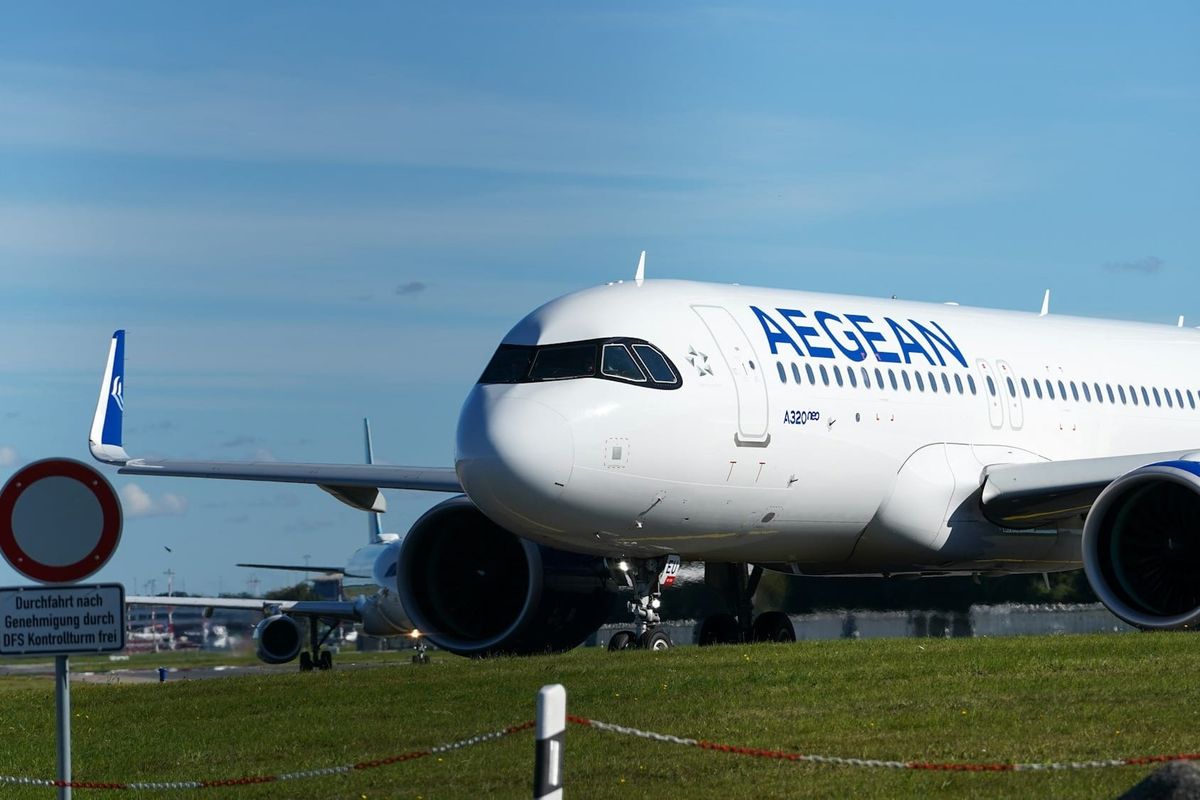
Aegean swings to a €3.3mn first-half loss as fuel bites
Aegean Airlines reported a first-half 2026 net loss of €3.3mn on 14 September, swinging from a €47.9mn profit a year earlier. Revenue rose 4% to €816.6mn and passengers grew 3% to 7.8mn. Fuel costs hit net profit by €40mn despite hedging.

€1 = $1.15
Aegean Airlines reported a first-half 2026 net loss of €3.3mn on 14 September, swinging from a €47.9mn profit in the same period a year earlier, as a €40mn hit from fuel and emissions costs erased the commercial gains from record revenue and the carrier's strongest passenger performance in its history. Pre-tax profit swung from a €66.0mn gain to a €5.7mn loss.
Consolidated revenue rose 4 per cent year-on-year to €816.6mn, with passenger traffic increasing 3 per cent to 7.8 million and EBITDA falling 7 per cent to €145.3mn; the commercial performance was solid by any prior-year benchmark, but the fuel environment made it irrelevant. Chief executive Dimitrios Gerogiannis said fuel remains roughly twice its January 2026 levels and that Aegean was maintaining a disciplined capacity outlook in response.
The Middle East dimension is directly visible in the results: Aegean attributed March's disproportionate weakness to the suspension of flights to Middle Eastern markets, which represent approximately 4 to 5 per cent of its total scheduled activity, and a sharp increase in fuel costs. The company has substantial fuel hedging in place but the hedging has been insufficient to offset a spike of this magnitude.
The first-half loss is Aegean's first since the post-pandemic recovery began; a loss in a period that includes the peak April-June season is the clearest expression yet of what the current fuel environment is doing to carriers without the scale, hedging depth or premium revenue mix to absorb it. Aegean held cash, cash equivalents and financial investments of €955mn as of December 2025; the balance sheet is robust, but the earnings trajectory is not.