Ryanair warns of a €2bn rise in next year's fuel bill
Ryanair's half-year profit fell 15 per cent to €2.15bn, and it expects next year's fuel bill to rise by about €2bn with only 25 per cent hedged. It is reviewing crew numbers and pay, and O'Leary says fares will rise materially.


All figures are in euros unless stated. €1 = $1.1143
Ryanair reported a 15 per cent fall in half-year profit after tax to €2.15bn on November 2, and warned that its fuel bill for the year from April 2027 will rise by about €2bn at current forward prices as the protection of its hedges falls away. Chief executive Michael O'Leary said European short-haul fares "will increase materially to reflect these much higher jet-fuel prices", although he expects higher fares to offset only part of the increase.
The six months to September were shaped by fares as much as by fuel, with revenue up 3 per cent to €10.08bn. Passenger numbers grew 6 per cent to 125.8mn, but the average fare fell 4 per cent to €55.70, which Ryanair attributed to the timing of Easter and to the Middle East conflict making customers hesitant and booking later.
The current year remains largely protected, since Ryanair has fixed the price of 80 per cent of its fuel at about $67 a barrel, and operating costs rose 10 per cent to €7.69bn in the half year, mainly because of fuel. The following year is far more exposed, with only 25 per cent hedged at about $95 a barrel, an increase from the 15 per cent it disclosed in July, while the market price was about $1,595 a tonne on October 30 against Ryanair's hedged price of $954.
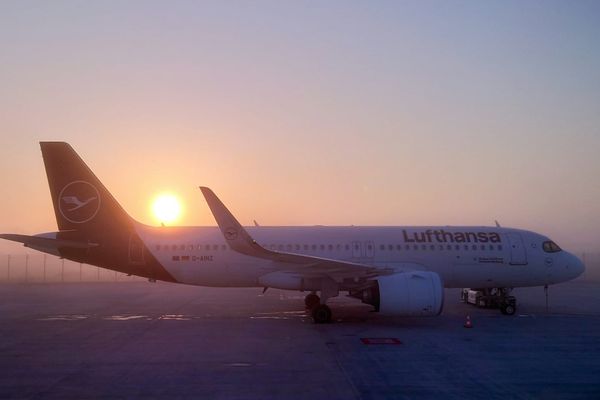
That level of cover is now well below its large network rivals, as Lufthansa said on November 3 that it had hedged more than 60 per cent of its 2027 fuel and IAG on November 6 put its own cover at 45 per cent. Ryanair, which has long enjoyed a cost advantage over most of Europe, will therefore face market fuel prices sooner than the groups it competes with on many routes.
The airline's response is a broad review of costs, covering negotiations on airport charges, lower crewing ratios on its aircraft and wider use of artificial intelligence in operations and support functions. It also said that some labour agreements reaching maturity may require temporary pay freezes, a step likely to test its relations with unions.
Capacity is moving with costs, as Ryanair cut its traffic target for the year to 214mn passengers from 216mn and is shifting aircraft towards Albania, Italy, Morocco, Slovakia and Sweden, which it says have cut aviation taxes or fees. It is reducing capacity in Austria, Germany and regional Spain, where it cites high taxes and rising costs.
The near-term outlook is cautious rather than weak, since Ryanair said fares for October to December are trending modestly ahead of last year on strong demand. It declined to give profit guidance for the year because it has no visibility of the January to March quarter and booking windows have shortened.
Growth will resume with new aircraft, since the first 16 Boeing 737 Max 10s are due in spring 2027 following US certification last month, with European approval expected before the end of the year. Ryanair has up to 300 of the larger aircraft on order for delivery between 2027 and 2034.
The balance sheet gives Ryanair room to absorb the fuel shock, with net cash of €2.0bn at the end of September, an interim dividend of €0.273 a share payable in February and a new €800mn share buyback due to start the same month.
What to watch: whether fares for the Christmas and new year period confirm the modest improvement, how unions respond to any pay freezes, and whether Ryanair adds to its hedging for the year from April 2027 before the summer.