The war Europe started is the one Chinese airlines are winning
While European carriers add hours and fuel to every Asia flight, Chinese airlines still cross Siberia. China Eastern operates 20 Europe routes this summer. Air China's Europe seat capacity is up 58% on 2019.

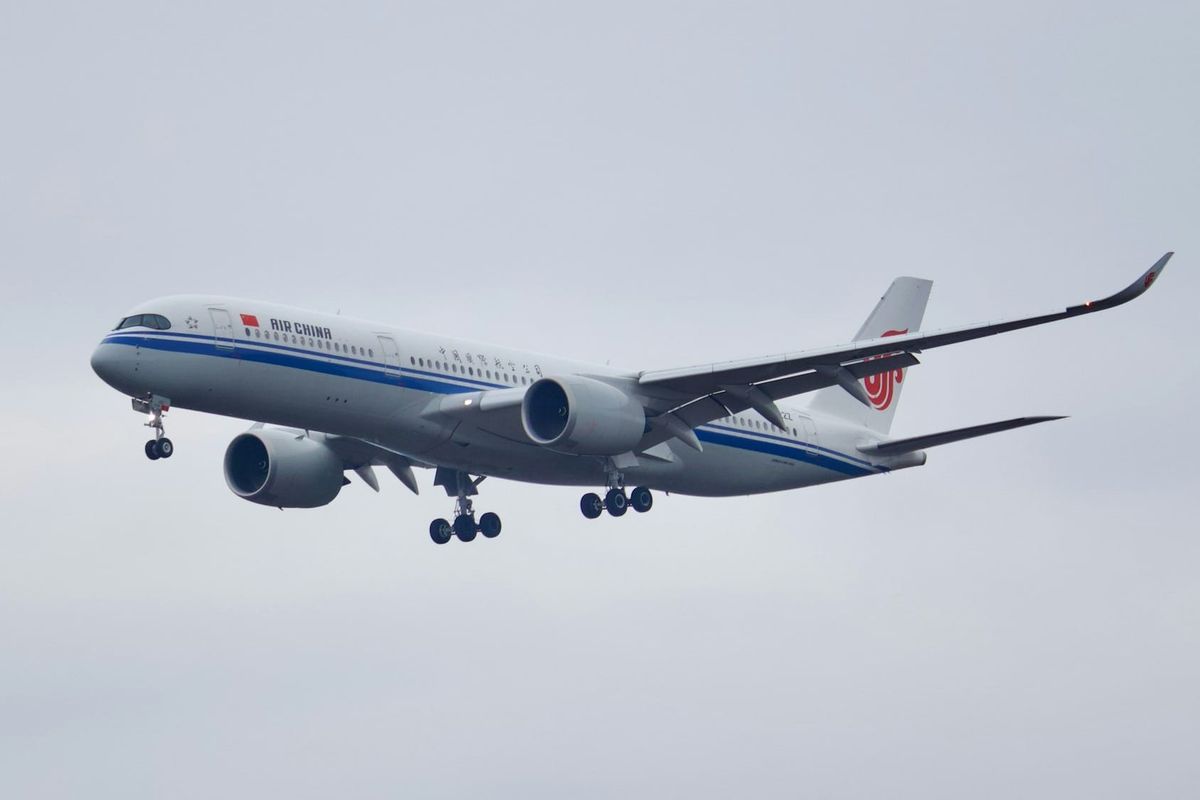
Four years after the Siberian corridor closed, Chinese airlines have turned a geopolitical ban into a permanent competitive advantage.
In February 2022, over 360,000 flights annually crossed Siberia, cutting hours off journeys between London and Tokyo, Frankfurt and Beijing, Helsinki and Seoul. That corridor closed overnight. What followed was framed as a temporary disruption. Four years on, is anything but.
The numbers tell a stark story. Chinese airlines are expected to control 83% of the Europe-China market in summer 2026, up from roughly two-thirds in 2019. That is not post-pandemic recovery. That is structural displacement.
The cost of airspace
While European carriers are barred from Russian airspace, airlines from China and the Middle East retain access, a disparity that enables them to offer ticket prices 5-35% lower on Europe-Asia routes. The penalty for European carriers is measured in hours and fuel. Finnair's Helsinki-Tokyo route jumped from 9 to 13 hours. A London-Tokyo flight that previously flew over Moscow now goes through Istanbul, Turkmenistan, and northern China. Each of those extra hours burns fuel, consumes crew duty time, and erodes aircraft utilisation. Multiply that across dozens of affected routes, and the structural cost disadvantage becomes permanent.
Chinese carriers move fast
Beijing has not been passive about the opportunity. China Eastern alone will operate 20 China-Europe routes during summer 2026, offering around 1.9 million two-way seats, up from 1.58 million a year earlier. Air China is expanding even faster, with two-way seat capacity between Europe and mainland China reaching 4.53 million seats this summer, up from 2.86 million in pre-war 2019. The expansion is not limited to established corridors. Hainan Airlines recently opened a direct connection between Brussels and Chongqing, adding to its services from the Belgian capital to Beijing, Shanghai and Shenzhen. China-Belgium capacity is up 63% year on year, Spain up 38%, the UK up 10%.
The carriers that lost most
No European airline exemplifies the disruption more sharply than Finnair. Once positioned as the fastest bridge between Europe and Asia, the Finnish carrier was forced to cancel several Asian destinations in 2022, and by 2025 was basing many Asian services out of Dubai rather than Helsinki. That is not a rerouting. It is the abandonment of the entire strategic premise on which the airline was built. SAS has not operated direct flights to China at all in 2025, having concluded that the route economics no longer work when the Copenhagen-Shanghai leg alone runs nearly two hours longer than before the closure.
Brussels has noticed, but has no good options
Executives from Air France-KLM and Lufthansa have formally requested the EU to reassess current regulations, arguing that restrictions are creating economic disparities on long-haul routes to Asia. Their preferred remedy, lobbying Washington to restrict Chinese carriers' access to US airspace if they continue using Russian routes, remains politically fraught and legally complex. The underlying problem is structural. European airlines are complying with EU sanctions. Chinese airlines are not subject to those sanctions. The result is a playing field that is not level, and no mechanism in Brussels to fix it quickly.
No end in sight
Despite Russia's proposal earlier last year to reopen airspace, Western governments continue tying any reopening to meaningful progress in Ukraine. For European carriers, that means competing indefinitely on a corridor where the cost structure is permanently tilted against them. The Siberian closure began as a geopolitical sanction. It has become one of the most consequential competitive events in the history of commercial aviation.