Delta withdraws full year guidance as fuel crisis arrives on the income statement
Delta beat on revenue and earnings in the first quarter. It also withdrew its full year guidance entirely. The refinery offset is real. The fuel crisis is now fully on the income statement; and Delta's results represent the ceiling for what US airlines can deliver in this environment.
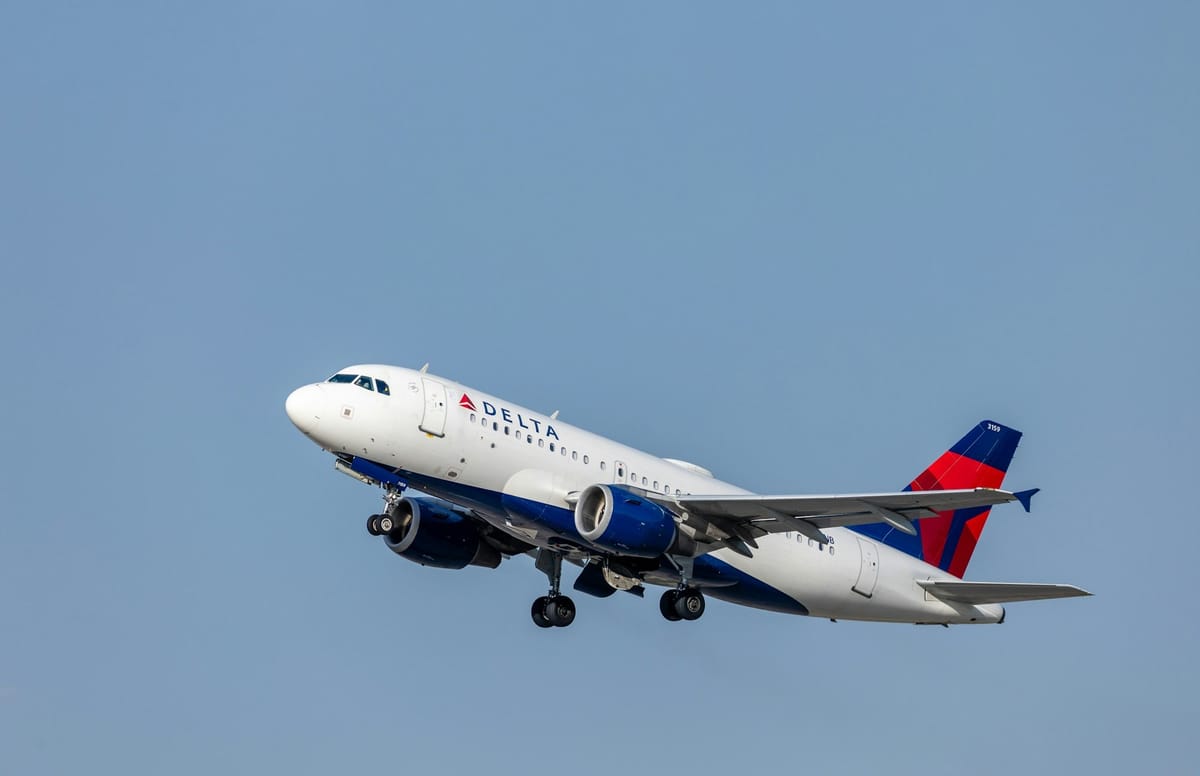
Delta Air Lines reported first quarter adjusted earnings of $0.64 per share on Tuesday morning, meeting analyst expectations and delivering a 44% increase over the same period last year. Revenue of $14.2 billion was a March quarter record, growing 9.4% year on year on broad demand strength across premium, corporate and loyalty segments.
The headline numbers are strong. The forward guidance is not.
Delta has withdrawn its full year earnings forecast of $6.50 to $7.50 per share, replacing it with June quarter guidance only. The airline is now guiding to earnings of $1.00 to $1.50 per share in the second quarter, on an operating margin of 6% to 8%, with revenue growth of low teens on flat capacity.
That guidance carries one significant caveat. It assumes fuel at the forward curve as of April 2, priced at approximately $4.30 per gallon for the second quarter. At that price, Delta is absorbing more than a $2 billion increase in fuel expense compared to what the June quarter would have cost before the Iran war began.
What the refinery did
Delta's ownership of the Trainer refinery near Philadelphia is the structural differentiator that sets it apart from every other major US carrier in this environment. In the first quarter, Delta paid an adjusted $2.62 per gallon for fuel; a 7% increase year on year but far below the $4.88 spot price that unhedged carriers are paying. The refinery provided a benefit of 6 cents per gallon in the first quarter. For the second quarter, Delta expects the refinery to contribute approximately $300 million in benefit.
That is real money. United, American and Southwest have no equivalent. When those carriers report in the coming weeks, their fuel cost disclosures will show the unfiltered impact of spot prices with no offset mechanism. Delta's results, strong as they are, represent the ceiling of what the US airline industry can deliver in this environment. The floor will be visible shortly.
The demand picture
The strength of Delta's revenue performance deserves attention because it complicates the narrative that high fuel prices inevitably destroy airline earnings. Revenue grew across every segment. Premium revenue increased 14% year on year. Corporate sales hit a record, with all sectors growing and 85% of respondents in Delta's corporate survey expecting travel spend to increase or remain stable in the second quarter. American Express remuneration grew 10% to over $2 billion for the quarter.
Chief executive Ed Bastian's statement was direct: "Demand remains strong, and we are taking actions to protect our margins and cash flow."
Those actions include meaningfully reducing capacity growth, with what Bastian described as a "downward bias until the fuel environment improves," and moving quickly to recapture higher fuel costs through fare increases. The company is cutting main cabin capacity while growing premium seat mix; a deliberate strategy to extract higher revenue per seat from a smaller number of flights.
The guidance withdrawal
The decision to withdraw full year guidance rather than simply lower it is the most significant signal in the release. It tells investors that Delta's management cannot confidently forecast where fuel prices will be in the second half of 2026. That is not a statement about Delta's business. It is a statement about the Iran war.
When full year guidance is withdrawn by the strongest balance sheet airline in the US, with the only refinery ownership structure in the industry, it sets an unambiguous tone for what United, American and Southwest will say when they report. Those carriers have no refinery, no hedging, and no equivalent premium revenue buffer. If Delta cannot see clearly to year end, the outlook for unhedged carriers through the summer and beyond is genuinely uncertain.
What comes next
The two numbers to watch are the fuel cost per gallon disclosure and whether United and American attempt to provide any full year guidance when they release their result later this month. Delta's $2.62 adjusted fuel cost gives the market a benchmark. Anything significantly above that at unhedged carriers confirms the structural divide we have been tracking in this series of articles.
Delta guided to a $1 billion profit in the June quarter. In its best year before the fuel crisis, the entire US airline industry generated $39.5 billion in net profit. The mathematics of what happens to that figure if $4.30 jet fuel persists through the summer is not complicated.


