Boeing's 737 wing bottleneck delays its next rate increase
Boeing's third quarter loss narrowed to $116mn on revenue of $24.2bn, although its adjusted loss missed forecasts and Kelly Ortberg said the 737 will not be fully stable at 47 a month until next year, pushing rate 52 into late 2027.

Boeing reported a third quarter net loss of $116mn on October 27, against a loss of $5.3bn a year earlier, as revenue rose 4 per cent to $24.2bn, but its adjusted loss of $0.34 a share was wider than analysts had expected and the shares fell by about a tenth in early trading. Chief executive Kelly Ortberg also conceded that the 737 programme is taking longer than planned to stabilise at 47 aircraft a month, which pushes back the next increase in output.
"It is taking us longer than we had expected to demonstrate performance at Rate 47," Ortberg said, adding that he expects it to "take us into next year to get fully stable at this rate." The constraint is internal, with the wing shop in Renton unable to build wings steadily enough to support 47 a month after planned improvements to the flow of work failed to deliver the savings Boeing expected.
The delay affects both this year's deliveries and the timetable beyond them, since Boeing handed over 124 737s in the third quarter and 367 in the first nine months, an average of about 41 a month, and it will fall short of its goal of 500 737 deliveries for 2026, while the move to 52 a month is now expected in the second half of 2027.
Total commercial deliveries rose by one to 161 in the quarter, including 22 787s, although the commercial aircraft division still lost $697mn on revenue that fell 3 per cent to $10.7bn. Boeing blamed the mix of aircraft delivered, the cost of preparing for higher production rates and pressure in the supply chain.
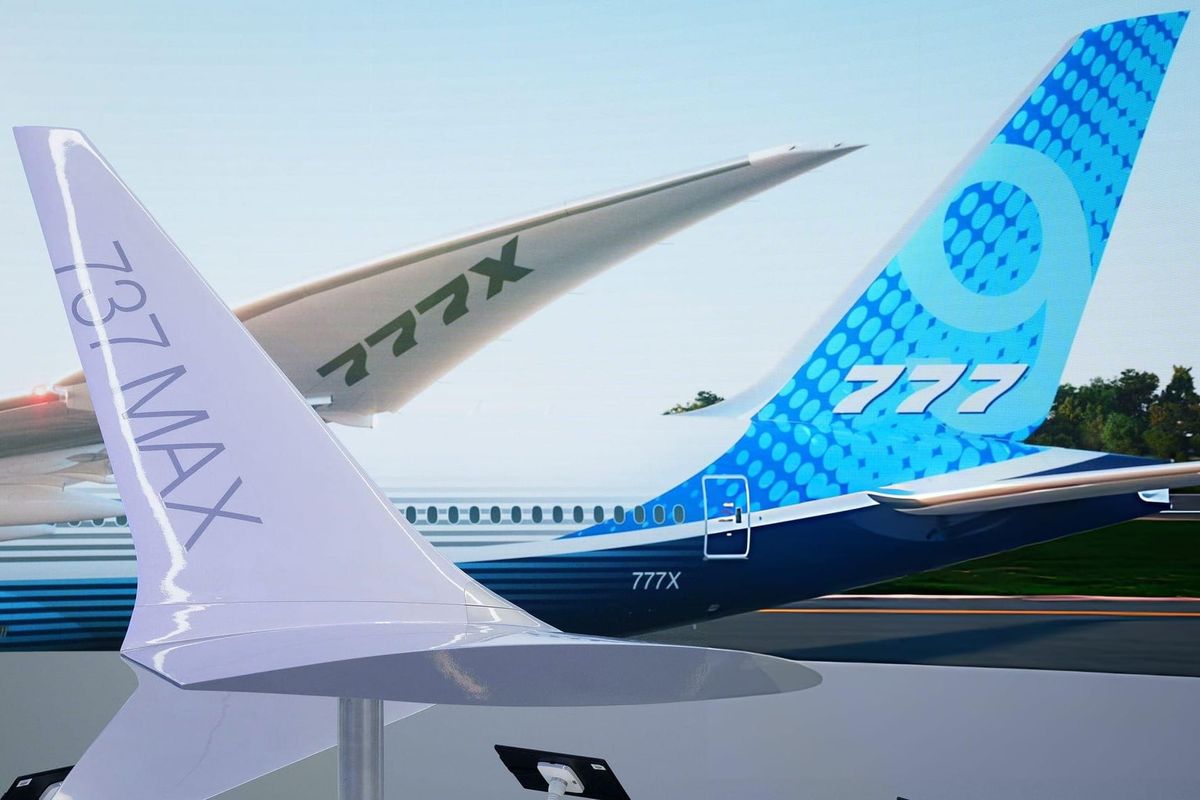
The 787 offers firmer progress, with production steady at eight a month and an increase to 10 planned by the end of the year, although Boeing expects 2026 deliveries at the low end of its range of 90–100, with engine supply and seat certification making handovers uneven. The 777X remains in certification flight testing, and Boeing still expects first delivery in 2027, with its cash plan assuming approval in the middle of the year.
The 737 Max 10, certified by the US Federal Aviation Administration on October 20, will not reach airlines until early next year because the new North Line at Everett, where it will be built at about five a month, needs its own production approval. Boeing expects to deliver about 30 Max 7s and Max 10s already built and held in inventory during 2027.
Cash is improving more steadily than production, with free cash flow of $464mn in the quarter after about $700mn of payments under the Justice Department settlement. Chief financial officer Jay Malave set out targets of about $2bn this year, $3bn in 2027, $6bn in 2028 and $10bn in 2029.
The defence business did most of the work in the quarter, with revenue up 15 per cent to $7.9bn and operating earnings more than quadrupling to $492mn, helped by a $252mn gain on the sale of HRL Laboratories. Boeing has also been selected to build the US Navy's F/A-XX fighter, which is not yet in its record $745bn order backlog.
The balance sheet remains heavy, with debt of $45.9bn against cash and investments of $20.7bn, which is why the 737 rate matters so much to investors: each step up in output is the main route to the cash flow Boeing needs to reduce that debt.
What to watch: The FAA's approval of the Everett North Line ahead of the first Max 10 deliveries, and whether the 787 reaches 10 a month by the end of the year.