Boeing to cut 5% of its commercial aircraft workforce
Boeing will cut about 5 per cent of its commercial aircraft workforce, roughly 2,500 jobs, after delaying the increase in 737 output to 2027 and holding 787 production at eight a month. Its commercial backlog stands at a record $612bn.

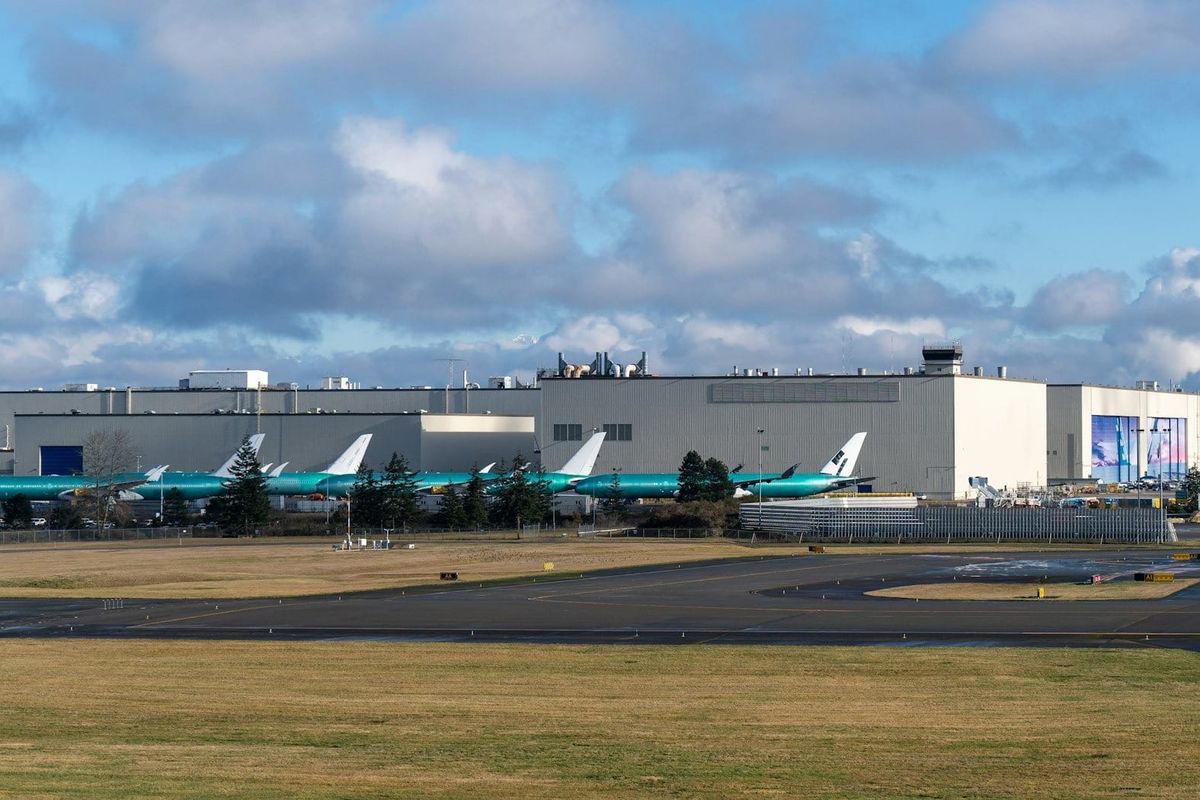
Boeing plans to cut about 5 per cent of the workforce of its commercial aircraft division, equivalent to roughly 2,500 jobs based on the 50,500 people it employed at the end of 2025, after slowing planned production increases for the 737 Max and the 787. Stephanie Pope, chief executive of Boeing Commercial Airplanes, told employees in a memo on November 9 that "adjusting our production schedules and reducing aircraft output puts us in an overstaffed position".
The reductions will combine attrition with involuntary layoffs, and affected employees are expected to be notified from December. It is Boeing's first workforce reduction since chief executive Kelly Ortberg announced 17,000 job cuts in 2024, and Pope wrote that "we need to align our staffing levels to our revised business plan".
The plan changed with Boeing's third quarter results in October, when it pushed back the increase in 737 production from 42 to 47 aircraft a month into early 2027 and said it would miss its delivery targets for the 737 and the 787 this year. Ortberg had said in September that the increase was taking longer than expected, partly because the wing shop at its Renton factory near Seattle was not keeping up.
Dreamliner output has also stalled below its target, with production holding at eight aircraft a month in the third quarter against a planned 10. Pope said Boeing's factories and suppliers needed more time to stabilise before moving to higher rates, adding that "while we have made substantial progress, we have not yet fully recovered".
The cuts come despite strong demand, with Boeing holding a commercial backlog of more than 6,300 aircraft at the end of September, valued at a record $612bn. The commercial division delivered 161 aircraft in the third quarter yet still lost $697mn on revenue of $10.7bn, which shows how much the cost of preparing for higher rates is weighing on its results while output lags.
Pope pointed to progress elsewhere, crediting two years of investment in staff, training and factories for better quality and the certification of the 737-7 and 737-10. Boeing employed about 65,000 people in Washington state at the end of last year, and it is not yet clear whether the cuts will reach workers represented by the machinists' union or by SPEEA, which represents engineers and technicians, both of which have asked the company for more information.
For airlines, the decision confirms that new Boeing aircraft will arrive more slowly than planned, extending the shortage of new jets that has kept older aircraft flying and lease rates high.
What to watch: the scale and location of the notices in December, whether unionised staff are affected, the timing of approval for 47 737s a month in early 2027, and the production outlook Boeing gives with its next quarterly results.