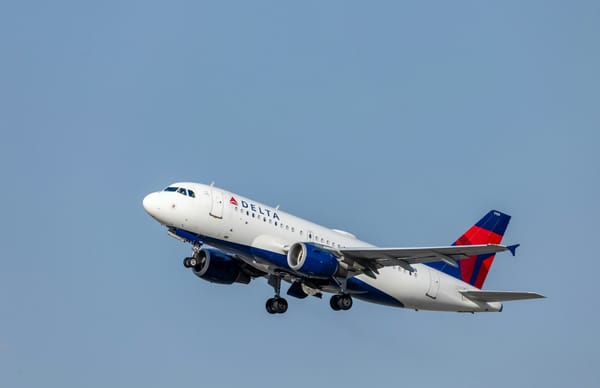
What Delta's numbers on Wednesday will tell us about the fuel crisis
Delta reports first quarter earnings on Wednesday at 6.30am Eastern. The headline revenue and EPS figures will receive the usual attention.

Delta Air Lines reports first quarter earnings on Wednesday morning at 6.30am Eastern. The headline numbers — analysts expect revenue of $14.8 billion and earnings of around 62 cents per share — will receive the usual attention. They are not the most important part of what Delta will say.
The numbers that matter on Wednesday are three. How much did fuel cost Delta in the first quarter. What percentage of second and third quarter fuel needs are hedged and at what price. And whether management withdraws, narrows or reaffirms its full year guidance of $6.50 to $7.50 earnings per share.
Those three disclosures will tell the industry more about the financial trajectory of the next six months than anything else reported this week.
Why Delta goes first
Delta opens airline earnings season by convention and by scale. With $58.3 billion in revenue in 2025 and what management described as the strongest balance sheet in its history — adjusted net debt of $14 billion, unencumbered assets of $35 billion — it is the carrier best positioned to absorb a fuel shock without immediate structural damage. If Delta is hurting, the rest of the industry is in serious difficulty.
The airline entered 2026 with considerable momentum. Full year 2025 delivered $5 billion in pre-tax profit, record free cash flow of $4.6 billion, and management guided for 20% earnings growth in 2026. In January, chief executive Ed Bastian described record bookings and corporate travel demand accelerating across every sector.
That was before February 28.
The fuel problem Delta cannot hedge away
Unlike most US carriers, Delta has partial insulation from fuel price spikes through its indirect ownership of the Trainer refinery near Philadelphia. The refinery processes crude oil into jet fuel and other products, providing Delta with a degree of cost visibility that purely unhedged carriers lack. During the 2022 fuel spike, the refinery was a meaningful earnings contributor.
The current crisis is testing that model. Jet fuel prices have more than doubled since late February, driven not by crude oil alone but by a collapse in refining capacity across the Persian Gulf. The crack spread — the margin between crude and refined jet fuel — surged from around $23 per barrel in 2025 to above $100 at the peak. A refinery hedged against crude price movements is only partially protected when the refining margin itself becomes the primary driver of cost.
Delta's CFO Dan Janki guided in January for non-fuel unit cost growth in the low single digits for 2026. That guidance was issued before jet fuel doubled. Whether Janki reaffirms it, qualifies it, or quietly buries it on Wednesday will tell investors more about Delta's actual confidence than any prepared statement.
What the guidance says about the rest of the industry
Delta's forward fuel cost disclosure is the data point the entire airline industry is waiting for. Analyst estimates for the quarter have been cut by 11% over the past two months, reflecting growing caution about the fuel cost impact on margins. Several analysts have already reduced price targets — Wells Fargo cut from $87 to $75, Jefferies from $84 to $72 — though the majority maintain buy ratings on the view that demand remains resilient enough to absorb fare increases.
The demand question is the other half of Wednesday's report. Delta's management has consistently argued that premium travel demand — which now accounts for a disproportionate share of its revenue mix — is less price elastic than economy travel. If that holds, fare increases pass through to passengers and margin pressure is contained. If corporate travel bookings begin to soften in response to higher fares and geopolitical uncertainty, the picture changes materially.
United, American and Southwest report in the weeks following Delta. All three are fully unhedged on fuel. Delta's commentary on Wednesday will set the analytical framework through which those subsequent reports are read.
The one number to watch
Delta guided full year earnings of $6.50 to $7.50 per share in January. The midpoint implies roughly $7 per share. At current fuel prices sustained through the year, that range looks optimistic. Whether management narrows the range downward, widens it to reflect uncertainty, or holds it unchanged will be the most read line in Wednesday's release.
A maintained guidance range signals management believes either that fuel prices will fall materially before year end, or that demand and fare increases are sufficient to offset the cost. A withdrawal or significant reduction signals something more serious — that the fuel shock is large enough to render January's assumptions obsolete.
Delta reports at 6.30am Eastern on Wednesday April 8. The earnings call follows at 10am Eastern.